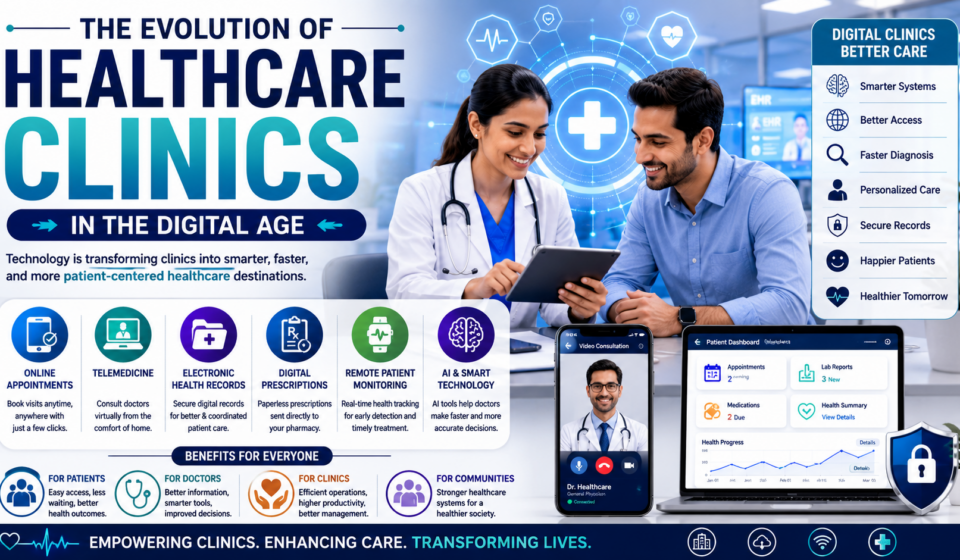

Healthcare clinics have changed rapidly in the digital age. In the past, most clinics depended on paper records, manual appointment systems, long waiting times, and face-to-face consultations only. Today, clinics are becoming smarter, faster, and more patient-focused with the help of digital technology. From online booking to telemedicine, electronic health records, AI tools, remote monitoring, and digital prescriptions, modern clinics are transforming how patients receive care.
What Is a Digital Healthcare Clinic?
A digital healthcare clinic is a modern medical facility that uses technology to improve patient care and clinic management. These clinics may offer online appointments, digital health records, video consultations, automated reminders, e-prescriptions, diagnostic software, and patient portals.
The goal of digital healthcare clinics is to make medical care easier, faster, and more connected. Patients can book visits, access test results, consult doctors, and receive follow-up guidance with less effort. Doctors can also view patient history quickly and make better decisions.
From Traditional Clinics to Smart Clinics
Traditional clinics mostly relied on manual processes. Patients had to call or visit the clinic to book appointments. Medical records were stored on paper, and test reports were often carried physically from one place to another. This sometimes caused delays, confusion, and repeated tests.
Smart clinics have changed this experience. Digital systems allow clinics to manage appointments, records, billing, prescriptions, and communication more efficiently. This helps reduce waiting time and improves the overall quality of care.
Online Appointment Booking
One of the biggest changes in modern clinics is online appointment booking. Patients no longer need to wait on calls or stand in long queues. They can choose a doctor, select a time slot, and confirm appointments through a website or mobile app.
Online booking improves convenience for patients and helps clinics manage schedules better. It also reduces crowding and allows staff to prepare for each patient in advance.
Telemedicine and Virtual Consultations
Telemedicine has become one of the most important parts of digital healthcare. It allows patients to consult doctors through video calls, phone calls, or chat-based platforms. This is especially useful for follow-ups, minor health concerns, chronic disease management, and patients who live far from clinics.
Virtual consultations save travel time and make healthcare more accessible. Elderly patients, busy professionals, and people in remote areas can benefit greatly from telemedicine.
Electronic Health Records
Electronic health records, also known as EHRs, have replaced paper-based files in many modern clinics. These records store patient history, prescriptions, allergies, lab results, diagnoses, and treatment plans digitally.
EHRs help doctors access accurate information quickly. This reduces the chances of errors and improves continuity of care. If a patient visits the same clinic again, the doctor can easily review past health details and provide better treatment.
Digital Prescriptions and Pharmacy Support
Digital prescriptions make the treatment process more efficient. Instead of handwritten prescriptions that may be difficult to read, doctors can generate clear digital prescriptions. These can be sent directly to patients or linked with pharmacies.
This reduces confusion, improves medication safety, and saves time. Patients can also receive dosage instructions, refill reminders, and follow-up alerts digitally.
AI and Healthcare Clinics
Artificial intelligence is playing a growing role in healthcare clinics. AI tools can support doctors by helping with symptom analysis, medical image review, patient data organization, and risk prediction. AI can also help clinics manage appointments, answer basic patient questions, and create reminders.
However, AI does not replace doctors. It supports clinical decision-making and helps healthcare professionals work more efficiently. Human judgment remains essential in diagnosis and treatment.
Remote Patient Monitoring
Remote patient monitoring allows doctors to track a patient’s health even when they are not inside the clinic. Devices such as smartwatches, glucose monitors, blood pressure machines, and fitness trackers can collect health data and share it with healthcare providers.
This is very useful for patients with chronic conditions such as diabetes, hypertension, heart disease, and respiratory problems. Regular monitoring helps doctors detect problems early and adjust treatment when needed.
Better Patient Communication
Digital tools have improved communication between clinics and patients. Patients can receive appointment reminders, health tips, test result updates, vaccination alerts, and follow-up messages through SMS, email, apps, or patient portals.
Clear communication helps patients follow medical advice properly. It also reduces missed appointments and improves treatment outcomes.
Faster Diagnosis and Lab Integration
Many modern clinics are connected with digital laboratory systems. When a patient completes a test, the report can be uploaded directly to the clinic’s system. Doctors can review results faster and provide treatment advice without unnecessary delays.
Digital lab integration saves time and reduces the risk of lost reports. It also helps maintain a complete health record for each patient.
Improved Clinic Management
Digital technology helps not only patients but also clinic staff. Appointment management, billing, inventory, staff scheduling, patient registration, and reporting can all be handled through clinic management software.
This reduces administrative workload and allows healthcare teams to focus more on patient care. A well-managed clinic provides a better experience for everyone.
Personalized Patient Care
Digital healthcare makes personalized care easier. When doctors have access to complete patient history, lifestyle details, test results, and follow-up records, they can create treatment plans based on individual needs.
Personalized care is especially important for chronic disease management, preventive health, women’s health, child care, and elderly care. Digital records help clinics understand patients better and offer more accurate guidance.
Data Security and Privacy
As clinics become digital, data security becomes very important. Patient information is sensitive and must be protected. Modern clinics need secure systems, strong passwords, encrypted data, and proper privacy policies.
Patients trust clinics with their personal health information. Therefore, digital healthcare clinics must follow strict safety practices to protect patient records and maintain confidence.
Challenges of Digital Healthcare Clinics
Although digital clinics offer many benefits, they also face challenges. Some patients may not be comfortable using apps or online systems. Internet access can be limited in some areas. Clinics also need trained staff, secure software, and regular technology updates.
Another challenge is maintaining a human touch. Healthcare is not only about systems and data; it is also about trust, care, and compassion. The best digital clinics combine technology with personal attention.
The Future of Healthcare Clinics
The future of healthcare clinics will be more connected, intelligent, and patient-centered. Clinics may use advanced AI tools, wearable health devices, digital diagnostics, online health dashboards, and integrated care systems.
Patients will expect faster access, easy communication, personalized treatment, and flexible consultation options. Clinics that adapt to digital transformation will be better prepared to serve modern healthcare needs.
Source
https://l1nq.com/gmbs7xr
https://l1nq.com/w89tuvc
Conclusion
The evolution of healthcare clinics in the digital age has changed the way patients access and experience medical care. Digital tools such as online booking, telemedicine, electronic health records, AI support, remote monitoring, and digital prescriptions are making clinics more efficient and patient-friendly.
However, technology should support healthcare, not replace human care. The best clinics will use digital innovation while maintaining compassion, trust, and personal attention. As healthcare continues to evolve, digital clinics will play a key role in improving access, quality, and long-term patient outcomes.
FAQs
1. What is a digital healthcare clinic?
A digital healthcare clinic is a clinic that uses technology such as online booking, electronic records, telemedicine, and digital prescriptions to improve patient care.
2. How has technology changed healthcare clinics?
Technology has made clinics faster, more organized, and more convenient through digital records, online appointments, virtual consultations, and automated communication.
3. What is telemedicine?
Telemedicine allows patients to consult doctors remotely through video calls, phone calls, or online platforms.
4. Are electronic health records useful?
Yes, electronic health records help doctors access patient history quickly, reduce errors, and improve continuity of care.
5. Can AI replace doctors in clinics?
No, AI cannot replace doctors. It supports doctors by helping with data analysis, reminders, and decision-making support.