
Modern clinics are changing the way patients receive medical care. In the past, many people visited clinics only when they were sick or needed a quick consultation. Today, clinics are becoming advanced healthcare centers that focus on prevention, early diagnosis, digital care, personalized treatment, and long-term wellness.
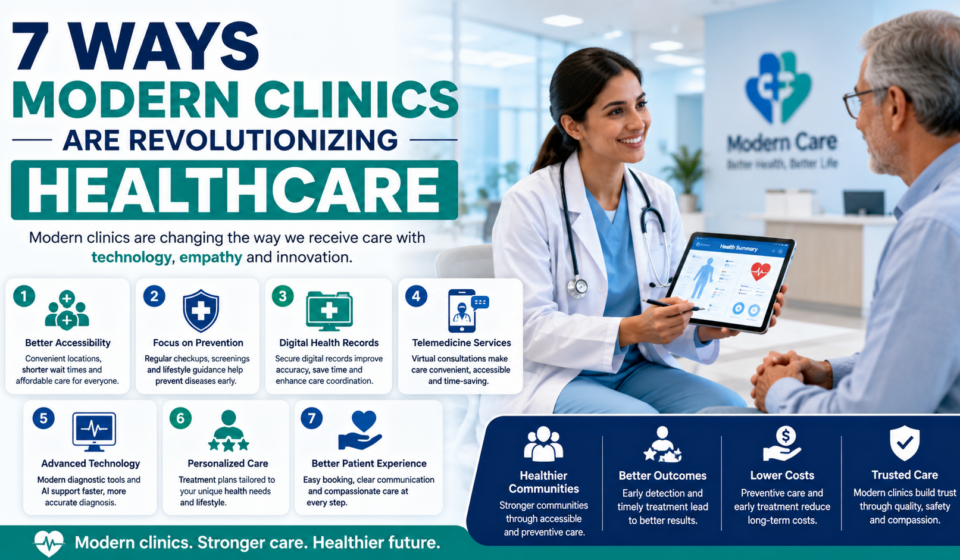
1. Modern Clinics Are Making Healthcare More Accessible
One of the biggest advantages of modern clinics is improved access to healthcare. Many patients avoid treatment because hospitals feel expensive, crowded, or difficult to reach. Clinics help solve this problem by offering convenient locations, shorter waiting times, and affordable services.
Modern clinics are especially useful for families, working professionals, elderly patients, and people living in smaller communities. Instead of waiting for a hospital appointment, patients can visit a clinic for regular checkups, basic tests, vaccinations, minor illnesses, and follow-up care.
This accessibility plays an important role in public health. When patients can easily reach medical care, they are more likely to treat health problems early. Early treatment can prevent complications and reduce the need for emergency care later.
2. Clinics Are Focusing More on Preventive Care
Modern healthcare is shifting from treating disease to preventing disease. Clinics are at the center of this change. Instead of waiting until patients become seriously ill, clinics now encourage regular health checkups, screenings, vaccinations, lifestyle counseling, and early risk detection.
Preventive care can help identify common conditions such as diabetes, high blood pressure, high cholesterol, heart disease, thyroid problems, and vitamin deficiencies. Many of these conditions do not show clear symptoms in the early stage. Regular clinic visits can help detect them before they become serious.
Clinics also educate patients about diet, exercise, sleep, stress management, and healthy habits. This makes patients more aware of their own health and helps them make better lifestyle decisions.
Preventive care is one of the strongest ways clinics are improving long-term health outcomes.
3. Digital Health Records Are Improving Patient Care
Modern clinics are moving away from paper files and using digital health records. These records store important patient information such as medical history, prescriptions, test reports, allergies, previous treatments, and doctor notes.
Digital records make healthcare faster and more organized. When a patient visits the clinic again, the doctor can quickly review past health information. This reduces confusion, saves time, and helps doctors make better decisions.
Digital records are also helpful when patients need referrals to specialists or hospitals. Instead of carrying multiple paper reports, patients can share organized digital information with healthcare providers.
This improves care coordination and reduces repeated tests, prescription errors, and communication gaps.
4. Telemedicine Is Expanding Clinic Services
Telemedicine has become an important part of modern clinic care. Many clinics now offer online consultations through video calls, phone calls, or healthcare apps. This is useful for follow-up visits, minor health concerns, medicine reviews, mental health support, and chronic disease management.
Telemedicine saves time and makes care more convenient. Patients who live far away, have busy schedules, or find it difficult to travel can still speak with a healthcare professional.
For example, a patient with diabetes may not need to visit the clinic every time for routine advice. The doctor can review reports online, adjust medicines if needed, and guide the patient through a virtual consultation.
However, telemedicine does not replace all in-person care. Serious symptoms, physical injuries, emergencies, and conditions requiring examination still need direct medical attention. The best modern clinics combine online and offline care for better results.
5. Clinics Are Using Technology for Faster Diagnosis
Modern clinics are using advanced diagnostic tools to identify health problems more quickly. Many clinics now provide blood tests, digital X-rays, ultrasound services, ECG, health screening packages, and point-of-care testing.
Fast diagnosis helps doctors start treatment earlier. It also reduces the stress of waiting for reports for several days. In some clinics, patients can receive test results digitally, making the process more convenient.
Technology is also helping clinics manage patient data, appointment schedules, lab reports, and prescriptions. Some clinics are using AI-supported tools to help doctors review reports, detect risk patterns, and improve decision-making.
This does not mean technology replaces doctors. Instead, it supports medical professionals and helps them work more efficiently.
6. Personalized Care Is Becoming More Common
Every patient is different. Modern clinics understand this and are moving toward personalized healthcare. Instead of giving the same advice to every patient, doctors now consider age, lifestyle, family history, medical background, test results, and personal health goals.
For example, two patients with high blood pressure may receive different care plans. One may need medication, while another may need lifestyle changes, diet control, and stress management. A patient with a family history of diabetes may need earlier screening and more regular monitoring.
Personalized care builds stronger trust between doctors and patients. Patients feel heard, understood, and more involved in their treatment. This can improve treatment success and encourage patients to follow medical advice properly.
7. Modern Clinics Are Improving Patient Experience
Patient experience is now a major focus in healthcare. Modern clinics are improving the entire journey, from booking an appointment to receiving treatment and follow-up care.
Many clinics now offer online appointment booking, digital payments, clean waiting areas, clear communication, friendly staff, quick reports, and reminder messages for follow-ups. These small improvements make healthcare less stressful for patients.
Good patient experience also includes clear explanations. Patients want to understand their diagnosis, treatment options, medicine instructions, and recovery plan. Modern clinics are training healthcare teams to communicate better and treat patients with respect.
When patients feel comfortable and informed, they are more likely to return for regular care and follow treatment correctly.
Why Modern Clinics Matter in 2026
Modern clinics are important because they reduce pressure on hospitals and make healthcare more practical for everyday needs. Not every medical issue requires a hospital visit. Clinics can manage many routine health concerns, preventive screenings, follow-ups, and minor illnesses.
They also support community health by making medical services available closer to where people live and work. This is especially valuable for patients who need regular monitoring, such as those with diabetes, asthma, heart disease, or blood pressure problems.
As healthcare becomes more digital and patient-centered, clinics will continue to play a major role in improving health access and outcomes.
Source
https://l1nq.com/nnkyzfc
https://l1nq.com/9vax8ya
Conclusion
Modern clinics are revolutionizing healthcare by making care more accessible, preventive, digital, personalized, and patient-friendly. They are no longer limited to basic consultations. Today, clinics offer advanced services such as digital records, telemedicine, diagnostic testing, chronic disease management, and wellness support.
For patients, this means faster care, easier access, better communication, and more control over personal health. Modern clinics also help reduce hospital burden by treating routine and non-emergency conditions efficiently.
In 2026 and beyond, clinics will continue to become smarter, more connected, and more focused on prevention. Patients who use clinic services regularly can benefit from early diagnosis, better treatment planning, and improved long-term wellness.
FAQs
1. What makes a clinic modern?
A modern clinic uses updated medical technology, digital records, online appointments, diagnostic tools, telemedicine, and patient-focused care to provide faster and better healthcare.
2. Are modern clinics better than traditional clinics?
Modern clinics often provide more convenient services, better technology, faster diagnosis, and improved patient experience compared to traditional clinics.
3. Can clinics handle serious medical conditions?
Clinics can manage many routine and chronic conditions, but serious emergencies, major injuries, and life-threatening symptoms should be treated at a hospital or emergency room.
4. How do clinics help with preventive healthcare?
Clinics provide regular checkups, screenings, vaccinations, health counseling, and early detection tests to help prevent serious diseases.
5. Is telemedicine useful in clinics?
Yes, telemedicine is useful for follow-ups, minor illnesses, medicine reviews, and chronic disease monitoring. However, some conditions still require an in-person visit.