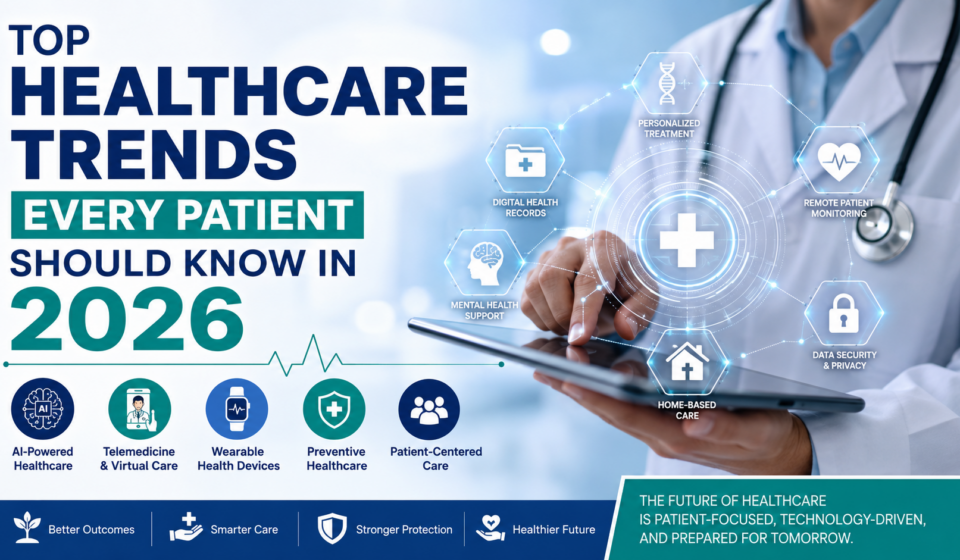

Healthcare is changing faster than ever, and 2026 is becoming a major turning point for patients, hospitals, clinics, and digital health services. From AI-powered diagnosis to virtual care, wearable devices, personalized treatment, and stronger patient safety systems, healthcare is becoming more connected, faster, and more patient-focused.
1. AI Is Becoming a Powerful Support Tool in Healthcare
Artificial intelligence is one of the biggest healthcare trends in 2026. AI is being used to support diagnosis, analyze medical images, review patient records, predict health risks, and help doctors make faster decisions.
For example, AI tools can help identify patterns in X-rays, blood reports, scans, and patient history. This does not mean AI is replacing doctors. Instead, AI works as an assistant that helps healthcare professionals save time and reduce human error.
Patients should understand that AI can improve speed and accuracy, but final medical decisions should still involve qualified doctors. The best healthcare systems will use AI with human supervision, transparency, and proper safety checks.
2. Telemedicine Is Becoming a Normal Part of Care
Telemedicine became popular during the pandemic, but in 2026 it has become a regular part of healthcare. Many patients now consult doctors through video calls, phone calls, or secure healthcare apps.
Telemedicine is especially helpful for follow-up visits, minor illnesses, mental health support, chronic disease management, and patients living far from hospitals. It saves travel time, reduces waiting room stress, and improves access to medical advice.
However, telemedicine is not suitable for every health issue. Emergency symptoms, severe pain, injuries, breathing problems, and serious infections still require in-person medical care. Patients should know when online consultation is enough and when a physical visit is necessary.
3. Wearable Health Devices Are Helping Patients Track Wellness
Smartwatches, fitness bands, glucose monitors, heart-rate trackers, and sleep-tracking devices are becoming more advanced in 2026. These devices help patients monitor daily health data such as heart rate, oxygen levels, sleep quality, physical activity, and blood sugar trends.
Wearables are useful because they encourage early awareness. A patient may notice irregular heart patterns, poor sleep, low activity, or abnormal glucose changes before symptoms become serious.
Still, wearable devices should not be treated as a replacement for medical diagnosis. They are helpful tools for tracking trends, but patients should consult healthcare professionals if they notice unusual results or symptoms.
4. Preventive Healthcare Is Getting More Attention
One of the most important healthcare trends in 2026 is the shift from treating illness to preventing illness. Clinics and healthcare providers are encouraging patients to go for regular checkups, screenings, vaccinations, lifestyle assessments, and early detection tests.
Preventive care can help detect health problems such as diabetes, high blood pressure, heart disease, cancer risks, and vitamin deficiencies at an early stage. Early detection often leads to better treatment outcomes and lower healthcare costs.
Patients should schedule routine health checkups based on age, family history, lifestyle, and existing medical conditions. Prevention is now becoming one of the strongest foundations of modern healthcare.
5. Personalized Treatment Plans Are Growing
Healthcare in 2026 is becoming more personalized. Instead of giving the same treatment to every patient, doctors are using patient history, genetics, lifestyle, test results, and digital health data to create customized care plans.
Personalized medicine can help improve treatment success because it considers the unique needs of each patient. For example, two patients with the same condition may need different medicines, diets, exercise plans, or monitoring routines.
This trend is especially important in chronic disease care, cancer treatment, mental health, diabetes management, and heart health. Patients should openly share their medical history, allergies, lifestyle habits, and family health background with doctors to receive better care.
6. Digital Health Records Are Improving Care Coordination
Digital health records are replacing paper-based systems in many clinics and hospitals. In 2026, more healthcare providers are using electronic records to store patient history, test reports, prescriptions, allergies, and treatment plans.
This makes healthcare more organized and connected. If a patient visits different departments or specialists, digital records help doctors access important information quickly. This reduces repeated tests, prescription mistakes, and communication gaps.
Patients should also keep personal copies of important reports, prescriptions, and medical documents. Having organized health records can be very useful during emergencies or when changing doctors.
7. Mental Health Care Is Becoming More Accessible
Mental health is no longer being ignored in modern healthcare. In 2026, more clinics, hospitals, schools, workplaces, and digital platforms are offering mental health support.
Online therapy, stress management programs, counseling apps, and mental wellness checkups are becoming more common. Patients are also becoming more open about anxiety, depression, burnout, sleep problems, and emotional stress.
This is an important trend because mental health affects physical health, relationships, productivity, and quality of life. Patients should seek professional support early instead of waiting until symptoms become severe.
8. Patient Experience Is Becoming a Priority
Patients today expect healthcare to be simple, fast, respectful, and transparent. In 2026, clinics and hospitals are focusing more on patient experience. This includes easier appointment booking, shorter waiting times, clear communication, digital payments, online reports, and better follow-up care.
Good patient experience is not only about comfort. It also improves trust, treatment adherence, and overall health outcomes. When patients understand their diagnosis and treatment plan clearly, they are more likely to follow medical advice properly.
Patients should choose healthcare providers who communicate clearly, respect privacy, explain treatment options, and offer reliable follow-up support.
9. Cybersecurity and Health Data Privacy Matter More Than Ever
As healthcare becomes digital, patient data protection is becoming a major concern. Medical records include sensitive information such as diagnoses, prescriptions, test results, insurance details, and personal identity data.
In 2026, patients need to be more careful about using healthcare apps, online portals, and digital health devices. Always choose trusted platforms, use strong passwords, avoid sharing medical details on unsecured websites, and check privacy policies before uploading health information.
Healthcare providers must also invest in strong cybersecurity systems to protect patient records from data breaches and misuse.
10. Home-Based Healthcare Is Expanding
Home healthcare is becoming more popular in 2026, especially for elderly patients, chronic illness care, post-surgery recovery, physiotherapy, and long-term monitoring.
Many healthcare services can now be delivered at home, including nursing care, medicine delivery, lab sample collection, remote monitoring, and rehabilitation support. This makes care more comfortable and convenient for patients who find it difficult to visit hospitals regularly.
Home healthcare can reduce hospital visits, lower infection risks, and improve recovery comfort. However, patients should use certified healthcare providers and ensure that home care is supervised by qualified professionals.
11. Healthcare Is Becoming More Connected
Modern healthcare is moving toward connected care. This means doctors, clinics, hospitals, labs, pharmacies, insurance providers, and digital health platforms are working together through technology.
Connected care helps patients receive smoother treatment because information flows better between different healthcare services. For example, a doctor can review lab results online, send prescriptions digitally, and monitor patient progress remotely.
For patients, this means fewer delays, fewer repeated tests, and better coordination between healthcare professionals.
12. Patients Are Taking More Control of Their Health
In 2026, patients are not just passive receivers of care. They are becoming active partners in their health journey. With access to digital tools, health information, online reports, and wearable data, patients can make more informed decisions.
However, patients should be careful about misinformation. Not every online health tip is accurate. Medical advice should always come from trusted healthcare professionals or reliable health organizations.
The future of healthcare depends on teamwork between patients and providers. The more informed and involved patients become, the better their health outcomes can be.
Source
https://sl1nk.com/89c5w8i
https://sl1nk.com/w7meoxi
Conclusion
Healthcare in 2026 is smarter, faster, more digital, and more patient-centered. AI, telemedicine, wearable devices, preventive care, personalized treatment, digital records, mental health support, and home healthcare are changing how patients receive care.
These trends can make healthcare more convenient and effective, but patients must use them wisely. Technology should support medical care, not replace professional advice. Patients should stay informed, protect their health data, attend regular checkups, and choose trusted healthcare providers.
The future of healthcare is not only about advanced technology. It is about creating safer, more accessible, and more personalized care for every patient.
FAQs
1. What is the biggest healthcare trend in 2026?
AI-powered healthcare is one of the biggest trends in 2026. It helps doctors analyze data, support diagnosis, improve workflows, and provide faster care.
2. Is telemedicine safe for patients?
Yes, telemedicine is safe for many routine consultations and follow-ups. However, serious symptoms, injuries, and emergencies should be treated in person.
3. Can wearable devices replace doctors?
No. Wearable devices can track health data, but they cannot replace professional medical diagnosis or treatment.
4. Why is preventive healthcare important?
Preventive healthcare helps detect diseases early, reduce complications, and improve long-term wellness.
5. How can patients protect their health data?
Patients should use trusted healthcare apps, strong passwords, secure portals, and avoid sharing medical information on unsafe websites.