
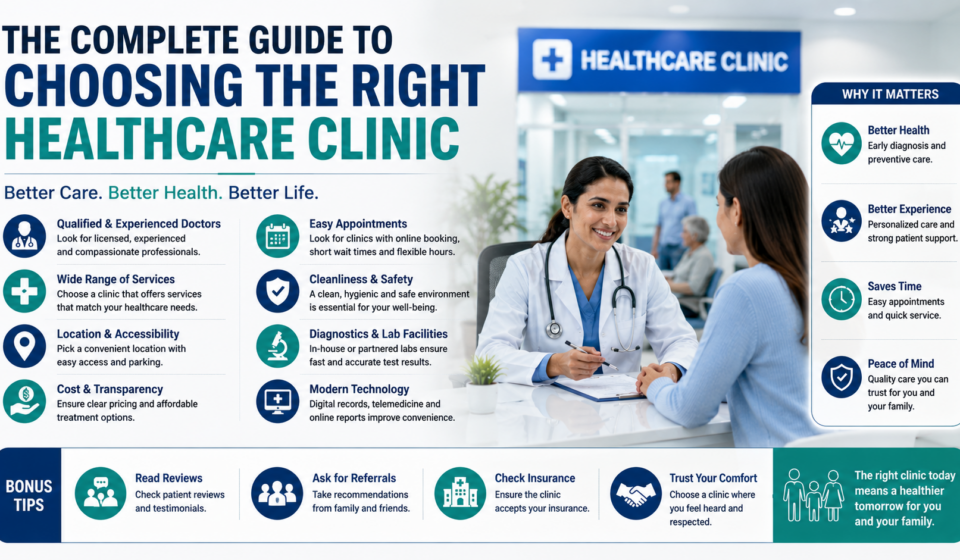

Choosing the right healthcare clinic is one of the most important decisions for your health and well-being. A good clinic does more than treat illness. It supports preventive care, early diagnosis, regular checkups, chronic disease management, and long-term wellness. Whether you need care for yourself, your family, or an elderly loved one, selecting the right clinic can improve your healthcare experience and help you receive timely medical support.
Understand Your Healthcare Needs
Before choosing a clinic, start by understanding your health requirements. Do you need routine checkups, family care, child healthcare, women’s health services, chronic disease management, dental care, diagnostic tests, or specialist consultations?
A clinic that is suitable for one person may not be the best choice for another. For example, a family with children may need a clinic with pediatric services, while an older adult may need chronic disease monitoring and regular follow-ups.
Check the Clinic’s Services
A reliable healthcare clinic should offer services that match your needs. Common clinic services may include general consultation, preventive health checkups, vaccinations, lab testing, minor illness treatment, chronic disease care, health screenings, and follow-up visits.
Some modern clinics also provide telemedicine, digital prescriptions, online reports, and remote patient support. Choosing a clinic with multiple services can save time and make healthcare more convenient.
Look for Qualified Healthcare Professionals
Doctors, nurses, and medical staff are the heart of any clinic. Before selecting a clinic, check whether the healthcare professionals are qualified, licensed, and experienced.
A good doctor should listen carefully, explain conditions clearly, answer questions, and recommend treatment based on the patient’s needs. Friendly and professional staff also improve the overall experience.
Consider Location and Accessibility
Location plays an important role when choosing a clinic. A nearby clinic is helpful for routine visits, urgent minor health issues, follow-ups, and family healthcare needs.
Also check whether the clinic has easy parking, wheelchair access, public transport availability, and convenient operating hours. Accessibility is especially important for elderly patients, people with disabilities, and families with children.
Review Appointment Availability
A good clinic should offer easy appointment scheduling. Long waiting times can be frustrating, especially when patients need quick care.
Check whether the clinic offers online booking, phone appointments, walk-in services, same-day appointments, or emergency support for minor urgent conditions. Flexible appointment options make healthcare easier and less stressful.
Evaluate Cleanliness and Safety
Cleanliness is a key sign of a professional healthcare clinic. The clinic should have clean waiting areas, examination rooms, restrooms, medical equipment, and hygiene practices.
Good clinics follow infection control measures, proper waste disposal, sanitized tools, and safe patient-handling procedures. A clean environment helps protect patients and staff from infections.
Compare Cost and Transparency
Healthcare costs are an important factor for many patients. Before choosing a clinic, check consultation fees, test charges, follow-up fees, and payment options.
A trustworthy clinic should provide clear information about costs. Hidden charges can create financial stress. Transparent pricing helps patients plan their healthcare expenses better.
Check Diagnostic and Lab Facilities
Many health conditions require blood tests, urine tests, X-rays, ultrasound, ECG, or other diagnostic services. A clinic with in-house or connected diagnostic facilities can make the process faster and easier.
Quick access to test results helps doctors make better decisions and start treatment earlier.
Look for Digital Healthcare Features
Technology is transforming modern clinics. Digital features such as electronic health records, online appointments, digital prescriptions, teleconsultation, patient portals, and online lab reports improve convenience.
These tools help patients manage their healthcare more efficiently and reduce paperwork.
Read Reviews and Patient Feedback
Patient reviews can give useful information about the clinic’s service quality, waiting time, staff behavior, doctor communication, cleanliness, and overall experience.
However, do not rely only on online reviews. Try to look for balanced feedback from trusted sources, friends, family, or local community members.
Check Emergency Support and Referral Network
Most clinics are not designed for serious emergencies, but a good clinic should know when to refer patients to hospitals or specialists.
Check whether the clinic has links with hospitals, diagnostic centers, pharmacies, and specialist doctors. A strong referral network helps patients receive advanced care when needed.
Consider Personalized Care
A good clinic should treat patients as individuals, not just cases. Personalized care means understanding the patient’s medical history, lifestyle, family background, health goals, and concerns.
Clinics that provide personalized care often build long-term trust with patients and support better health outcomes.
Choose a Clinic That Supports Preventive Care
Preventive healthcare is one of the most valuable services a clinic can provide. Regular screenings, vaccinations, lifestyle counseling, health checkups, and early diagnosis can prevent many serious conditions.
A clinic that focuses on prevention helps patients stay healthier instead of only treating illness after it appears.
Trust Your Comfort and Communication
Patients should feel comfortable discussing symptoms and concerns with their healthcare provider. If a clinic feels rushed, confusing, or uncomfortable, it may not be the right fit.
Good communication builds trust. Choose a clinic where doctors explain clearly, respect your questions, and involve you in healthcare decisions.
Source
https://sl1nk.com/pvpt13p
https://l1nq.com/2u47v8i
Conclusion
Choosing the right healthcare clinic requires careful thought. The best clinic should match your healthcare needs, offer qualified professionals, provide essential services, maintain cleanliness, use modern technology, and communicate clearly. Location, cost, appointment availability, patient reviews, and preventive care support are also important factors.
A reliable clinic can become a long-term healthcare partner for you and your family. By selecting carefully, you can receive better care, save time, reduce stress, and improve your overall health journey.
FAQs
1. What should I check before choosing a healthcare clinic?
You should check the clinic’s services, doctor qualifications, location, cleanliness, appointment availability, costs, diagnostic facilities, and patient reviews.
2. Is a nearby clinic always the best choice?
A nearby clinic is convenient, but quality of care, qualified doctors, available services, and safety standards are also important.
3. Why is preventive care important in a clinic?
Preventive care helps detect health problems early and supports long-term wellness through screenings, vaccinations, and regular checkups.
4. Should I choose a clinic with digital services?
Yes, digital services such as online appointments, digital prescriptions, and online reports can make healthcare more convenient and organized.
5. How do I know if a clinic is trustworthy?
A trustworthy clinic has qualified staff, transparent pricing, clean facilities, good communication, proper medical records, and positive patient feedback.