
Food insecurity — limited or uncertain access to adequate, nutritious food — affects approximately 13% of American households, representing over 40 million people. It is directly linked to worse management of chronic conditions including diabetes, hypertension, heart disease, and mental health — both because nutritious food is expensive and because food-insecure patients may make healthcare decisions (including medication adherence) based on competing financial pressures. Medical clinics that screen for and address food insecurity improve health outcomes for their most vulnerable patients. This guide explains how clinics support food-insecure patients.
Screening for Food Insecurity
The Hunger Vital Sign — a validated two-question screen asking “Within the past 12 months, we worried whether our food would run out before we got money to buy more” and “Within the past 12 months, the food we bought just didn’t last and we didn’t have money to get more” — is recommended by the American Academy of Pediatrics and multiple primary care organizations as standard at clinic visits. Answering “often true” or “sometimes true” to either question is a positive screen.
Clinic Response to Food Insecurity
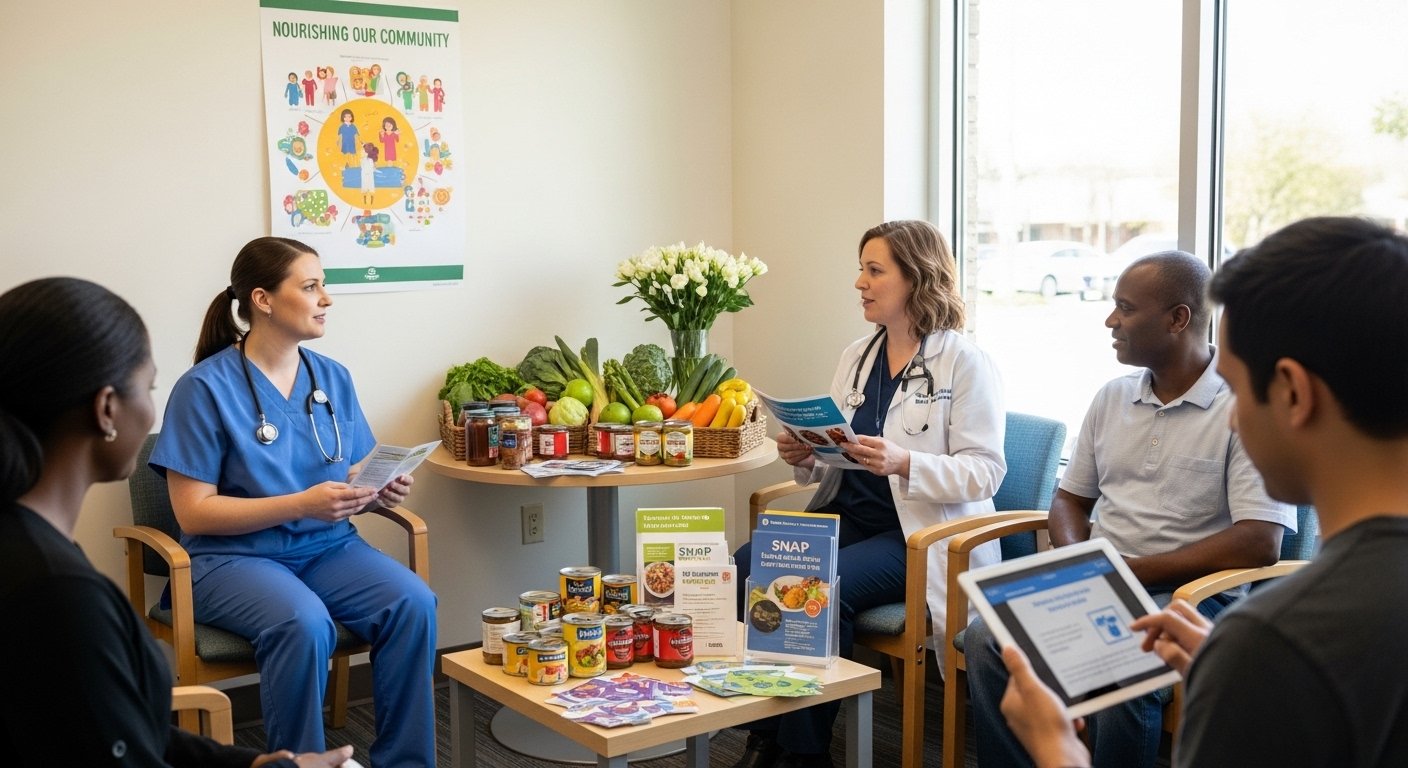
A positive food insecurity screen should trigger referral to available community resources: SNAP (Supplemental Nutrition Assistance Program) enrollment assistance, local food banks and pantries, WIC (Women, Infants, and Children program), food prescription programs (produce prescriptions that provide vouchers for fresh fruits and vegetables), community meal programs, and patient assistance programs for patients who must choose between food and medication.
Medical-Legal Partnerships
Some community health clinics partner with legal aid organizations — embedding legal advocates who help patients access social determinant-related benefits including SNAP enrollment, disability benefits, and housing assistance. These medical-legal partnerships address the root causes of health disparities by improving the social conditions that drive health outcomes.
Conclusion
Food insecurity is a social determinant of health that clinics are increasingly equipped to screen for, refer around, and in some cases directly address through innovative programs. If you are experiencing food insecurity and have a medical condition, tell your clinical team — they may be able to connect you with resources that reduce the financial pressure undermining your health management.
FAQs – Food Insecurity and Clinics
Q1. How do I apply for SNAP benefits?
A: Apply through your state’s SNAP office (often the Department of Social Services) online, by phone, or in person. Income and asset eligibility limits apply. Most state applications take 30 days to process; expedited processing (within 7 days) is available for very low-income households. Your clinic’s social worker or care coordinator can often assist with the application process.
Q2. Can diabetic patients use food banks?
A: Yes, and many food banks now work to include diabetes-appropriate foods (lower glycemic index items, fresh produce, lean proteins). Some food banks partner with healthcare systems to provide medically tailored groceries or produce prescriptions specifically for patients with diet-sensitive conditions. Ask your clinic whether any local programs address medical dietary needs.
Q3. Is it embarrassing to ask a doctor about food assistance?
A: No — and clinics increasingly recognize that asking about food security is as appropriate and important as asking about physical activity or smoking. Your provider is not there to judge your circumstances; they are there to help. Addressing food insecurity is treating the cause of illness, not just the symptoms.
Q4. What is WIC?
A: WIC (Special Supplemental Nutrition Program for Women, Infants, and Children) provides food benefits, nutrition education, and healthcare referrals to pregnant, postpartum, and breastfeeding women, infants, and children up to age 5 who meet income and nutritional risk criteria. WIC has been shown to improve birth outcomes, breastfeeding rates, and child nutrition and cognitive development.
Q5. Can food insecurity make it harder to manage diabetes?
A: Yes — dramatically. Food-insecure diabetics face impossible choices between affording food (to avoid hypoglycemia) and affording insulin. They experience more erratic glucose patterns, higher HbA1c levels, more hypoglycemia events, and worse outcomes than food-secure diabetics. Addressing food security is as important as medication management for this population.