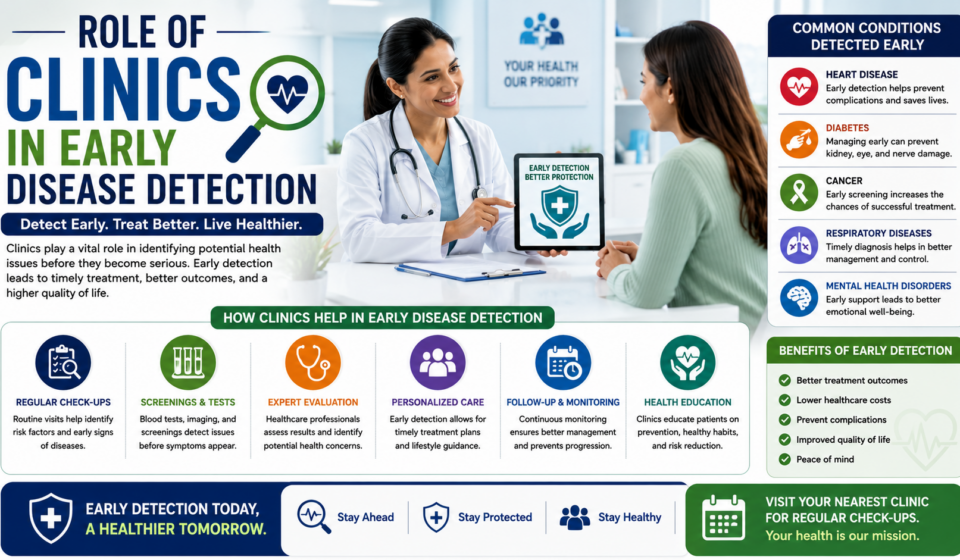

Clinics will remain vital to public health in 2026. They are the front-line people the first time a patient goes to a doctor’s office for a check-up, and they can identify health problems at an early stage. From diabetes, high blood pressure, infections to chronic diseases, early diagnosis can make all the difference to recovery and quality of life.
Increased survival chances
Early detection of a disease frequently results in more effective and easier treatment.
Addressing medical issues in the first place.
People typically seek medical advice in a clinic before they go to a hospital. They offer primary healthcare and serve as the first line of defense for many diseases.
Clinicians evaluate symptoms, examine patients and recommend tests as needed.
Clinics are more accessible than hospitals, and people are more likely to seek care early when they have a clinic.People are more likely to come in to seek care early when they have a clinic as they are more accessible than hospitals.
Routine Health Checkups
One of the primary ways that clinics are able to identify diseases early is through regular health checkups.
In the care of doctors, the following is monitored during routine visits:
Blood pressure
Blood sugar
Weight
Heart rate
Cholesterol
General health
The examinations may uncover a condition that the patient may not be able to detect.
Sometimes, for instance, hypertension is asymptomatic but can be discovered at a routine check-up at a clinic.
Chronic Diseases Screening
Chronic diseases are those that are long-lasting and may need long-term management. They are mainly detected at a very early stage at clinics.
The following are chronic conditions found in clinics:
Diabetes
Hypertension
Asthma
Thyroid disorders
Kidney disease
Heart conditions
Doctors can start treatment early with regular screening, and minimize complications.
Immunity and disease prevention.
Clinics also offer immunizations and preventive health care services. These can minimize the transmission of infectious diseases and safeguard public health.
Vaccination promotes early prevention of diseases like:
Influenza
Hepatitis
COVID-19
Tetanus
Childhood infections
Preventive services enhance community health and lower hospital admissions.
Diagnostic Testing
Today equips the clinics with all the latest diagnostics equipment which aids in the early detection of disease.
These are some of the common diagnostic services:
Blood tests
Urine tests
X-rays
Ultrasound
ECG
Rapid infection tests
These aids enable physicians to make accurate diagnoses and offer prompt treatment.
Diagnostics are more reliable, and faster in 2026.
Detecting Infectious Diseases
Early detection of infectious diseases is crucial and the clinics play a vital role. Early diagnosis is essential in preventing outbreaks and timely treatment of patients.
Examples include:
Viral infections
Tuberculosis
Dengue
Malaria
Respiratory infections
Early testing minimizes the spread of disease to others.
Clinics are particularly useful in the midst of seasonal outbreaks.
Identifying Lifestyle-Related Conditions
With the modern lifestyle, there’s been a rise in the possibility of diseases that are associated with bad habits. Clinics are used to identify these risks on regular visits.
Examples include:
Obesity
High cholesterol
Stress-related conditions
Sleep disorders
Nutritional deficiencies
Before these things get worse, doctors can be able to give suggestions on lifestyle changes.
This aids in the prevention and control of disease and in the maintenance of health over time.
The role of doctor in Clinic.
Clinics have trained doctors who know the signs of warning. They ask questions and review symptoms and then suggest tests for the patient based on the history.
Doctors assess:
Family medical history
Lifestyle habits
Symptoms
Existing conditions
This way, it is possible to identify risks before significant symptoms take place.
Only a professional evaluation can provide a proper diagnosis.
The importance of community clinics is here to stay.
Community clinics enhance access to health care, particularly in local neighborhoods and the rural community.
Benefits include:
Affordable healthcare
Convenient location
Quick consultations
Preventive programs
Family care services
They help everyone get health care, even those who would not otherwise seek it out, and make it more likely that people will have regular check-ups.
Community clinics are needed for public health systems.
Bring technology into modern clinics.Integrate technology in modern clinics.
Early detection has been greatly improved by technology.
Modern clinics use:
Electronic medical records
AI-based diagnosis support
Digital screening tools
Telemedicine consultations
Online test reports
These tools assist doctors to diagnose diseases earlier and keep track of patients’ health effectively.
Preventative care is more efficient with digital healthcare.
Why Patient Awareness is important.The significance of Patient Awareness.
Patients are also an important key to early diagnosis of the disease.
Mild symptoms are often over-looked, and can cause delays in diagnosis.
Patients should go to the clinics when they have:
Fatigue
Fever
Unexplained pain
Weight changes
Persistent cough
Digestive issues
Early care will yield better treatment results.
To prevent, you need to be aware.
The ability of clinics to lower healthcare expenses.The way clinics can cut down on healthcare costs.
Advanced diseases are a lot more expensive to treat than early treatment.
By reducing costs, Clinics:
Diagnosing conditions early
Preventing complications
Avoiding hospitalization
Reducing emergency visits
Preventive healthcare is more cost-effective and healthier.
Clinics can save a lot of money over a period of time.
Supporting Public Health
Clinics are important for public health to watch for trends and to promote prevention.
They contribute through:
Vaccination programs
Health screenings
Awareness campaigns
Community outreach
Chronic disease management
They don’t just treat people, they’re helping to improve the health of the community around them.
Source
https://sl1nk.com/em48cmg
https://l1nq.com/t053e7c
Conclusion
Clinics are a vital part in the early detection of disease because of the routine checkups, screening, diagnostic testing and medical professional advice they provide. They are frequently the initial point of health care contact and their ability to spot illnesses before they get out of hand.
Clinics remain a vital part of the healthcare system, providing patients with cutting-edge technology, convenient access to care, and proactive outreach initiatives in 2026. The earlier you can detect it, the better the odds of successful treatment, the lower the cost of health care, and the more likely you are to maintain your health.
Most people should have visits to the clinic regularly as part of their health care. Preventive care is a lifesaver and can make a world of difference to people and communities.
FAQs
1.What are the reasons why clinics are important for early disease detection?
Clinics deliver routine screenings, tests, and medical evaluations which aid to determine any disease in its early stages.
2.What are some diseases that clinics can catch early on?
Clinics are able to diagnose diabetes, high blood pressure, infections, heart disease, thyroid issues and a host of other diseases.
3.At what intervals should people go to a clinic for exams?
Generally, adults need at least one health checkup every year or as needed for the individual based on their age and medical history.
4.Do community clinics provide benefit for provision of preventive health care?
Yes, community clinics help to increase access to health care and promote regular screened exams.
5.Does early disease detection save money?
Although early diagnosis does not always lead to lower treatment expenses, it certainly will avoid serious complications.