
Hospital readmission — returning to the hospital within 30 days of discharge — affects approximately 20% of Medicare patients and represents both a marker of inadequate care transitions and a significant driver of healthcare costs. The Centers for Medicare and Medicaid Services (CMS) penalizes hospitals with above-expected readmission rates, creating financial incentives for improving discharge processes and post-discharge support. Medical clinics are critical partners in readmission prevention — providing the timely post-discharge follow-up, medication reconciliation, and chronic disease management that keeps recently hospitalized patients stable at home. This guide explains how clinics help prevent readmission.
Post-Discharge Clinic Follow-Up
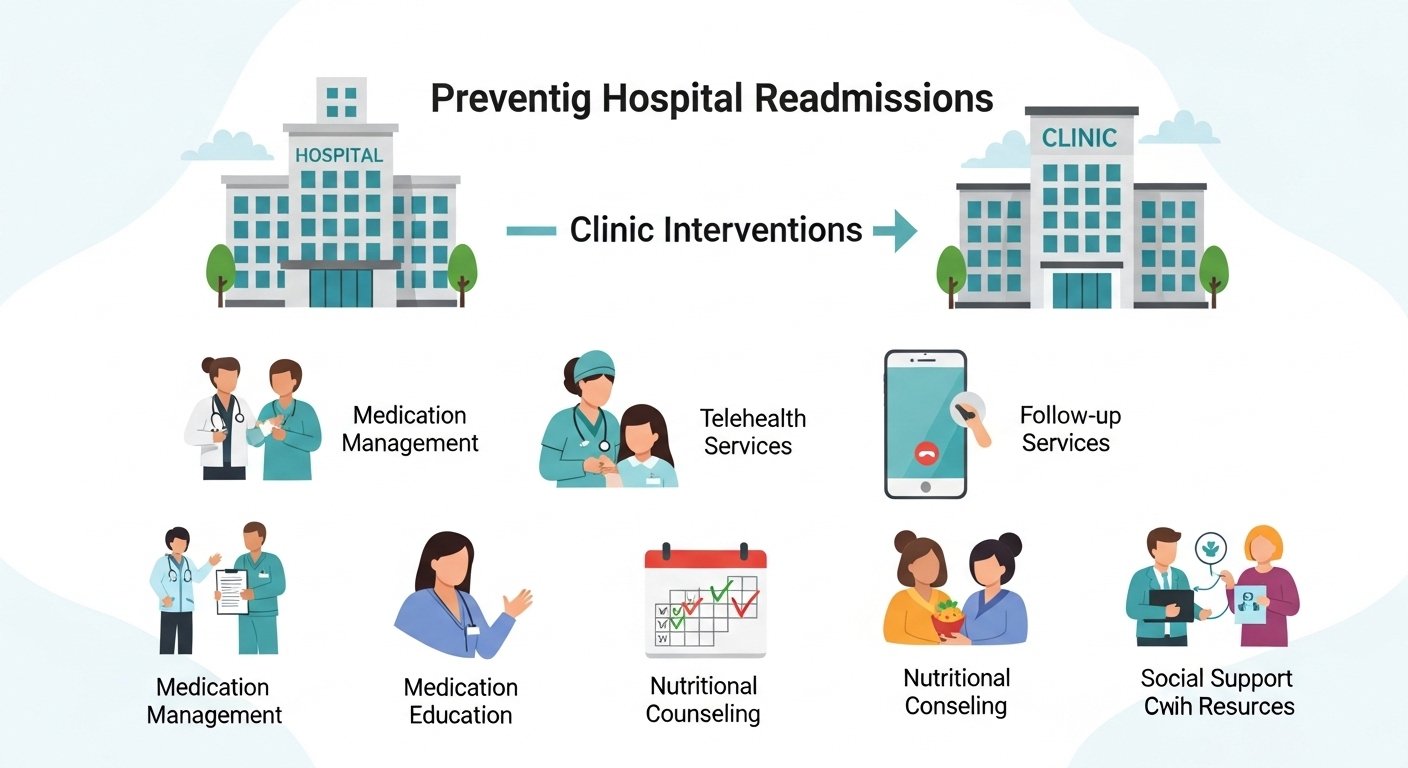
A follow-up clinic visit within 7–14 days of hospital discharge is one of the strongest readmission prevention interventions available. This visit: reviews the hospitalization, reconciles medications (changes made in hospital vs. outpatient medications), confirms the patient understands their discharge instructions, identifies early signs of decompensation, and coordinates with the hospital team on ongoing management. National quality standards call for post-discharge follow-up within 7 days for heart failure patients — a high-readmission diagnosis where early decompensation is common.
Medication Reconciliation
Medication discrepancies between hospital discharge medications and what patients were taking before admission — and between what patients were prescribed and what they are actually taking — are a major driver of readmission. Clinics conduct careful medication reconciliation at post-discharge visits, confirming what the patient is actually taking, clarifying any confusion about new or changed medications, and addressing affordability barriers that prevent medication adherence.
Telehealth and Remote Monitoring
Telehealth check-ins in the days immediately following discharge extend clinic reach without requiring in-person visits — assessing symptom stability, medication adherence, and early warning signs that warrant expedited in-person evaluation. Remote patient monitoring (weight scale in heart failure, blood pressure monitor in hypertensive crisis, glucose monitoring in diabetic ketoacidosis) provides objective data that enables proactive intervention before readmission-triggering decompensation occurs.
Source
https://l1nq.com/4rhhw9k
https://l1nq.com/xmsz61g
Conclusion
Hospital readmission is often preventable through coordinated post-discharge support that begins before the patient leaves the hospital and continues through their first critical weeks at home. Accept your post-discharge clinic appointment — it is one of the most important healthcare touchpoints in your recovery. Be honest with your clinic team about symptoms, medication difficulties, and any barriers preventing you from following your discharge plan.
FAQs – Readmission Prevention
Q1. What conditions have the highest readmission rates?
A: Heart failure, pneumonia, acute myocardial infarction, COPD, and sepsis have the highest hospital readmission rates — these are the primary focus of CMS Hospital Readmissions Reduction Program. They are also the conditions where post-discharge clinic management is most impactful.
Q2. Why is medication reconciliation so important after hospitalization?
A: Medication changes are common during hospitalization — new medications are started, doses are adjusted, and some home medications are stopped. Discharge instructions are often complex and confusing. Patients frequently leave the hospital confused about what medications to take, at what doses, and which previous medications to continue or discontinue. Errors at this transition directly cause readmissions.
Q3. What are signs I should call my clinic rather than wait for my appointment?
A: After hospitalization, contact your clinic immediately for: worsening shortness of breath; chest pain; weight gain of more than 2 pounds in a day or 5 pounds in a week (heart failure warning); increasing leg swelling; fever; blood in urine or stool; worsening pain; signs of wound infection; or any symptom similar to those that caused your hospitalization.
Q4. What is a care transition specialist?
A: Care transition specialists — often nurses or social workers — coordinate the transition from hospital to home or other care setting, ensuring that follow-up appointments are scheduled, medications are reconciled and accessible, home support is arranged, and the patient understands warning signs requiring action. They often bridge the communication between hospital and primary care clinic during the critical post-discharge period.
Q5. How can family members help prevent readmission?
A: Accompany your family member to post-discharge clinic visits to hear instructions directly. Help monitor for warning signs — weight, breathing, swelling in heart failure; glucose levels in diabetes. Assist with medication management to ensure correct medications are taken at correct times. Help transportation barriers are overcome to ensure appointment attendance. Your involvement is one of the most powerful readmission prevention tools available.