
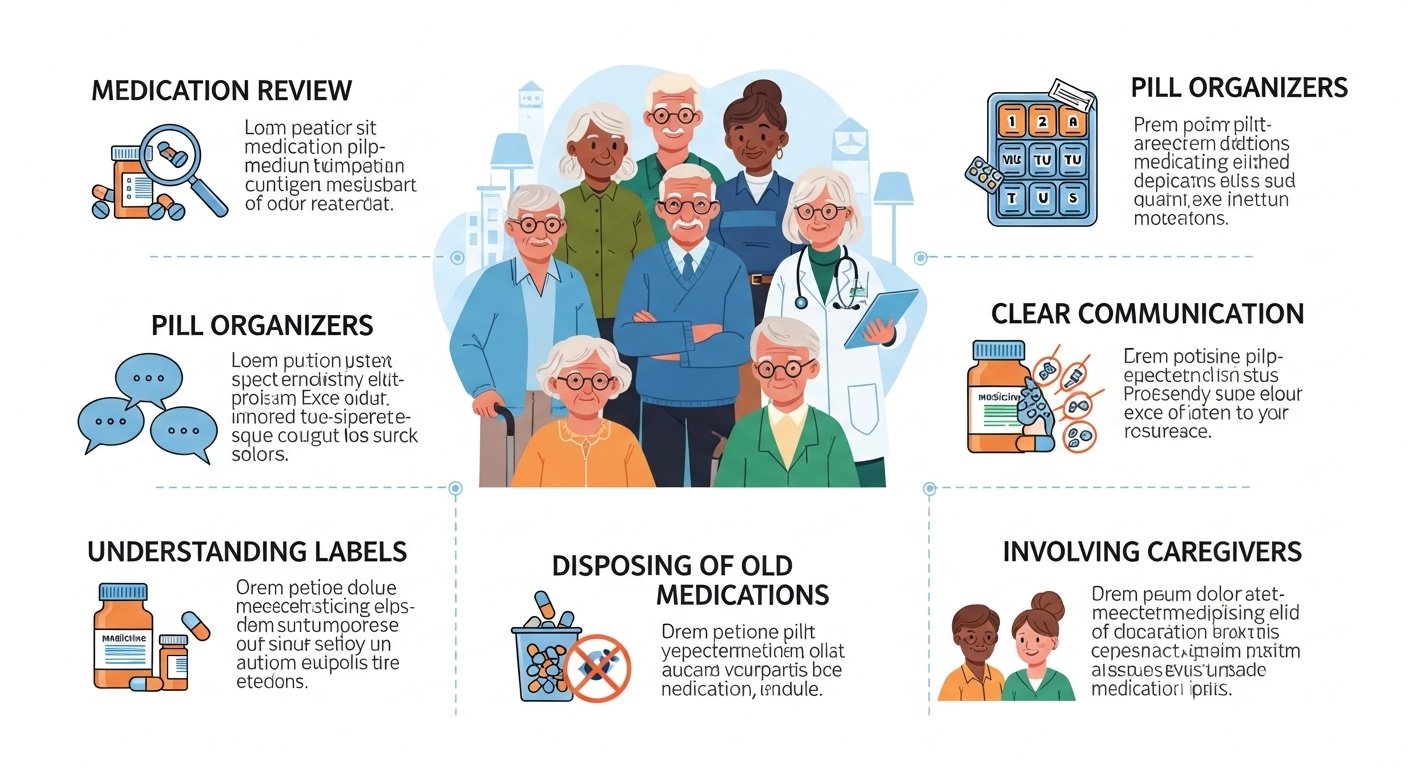

Older adults are disproportionately affected by medication errors — they take more medications (creating more interaction opportunities), experience age-related changes in drug metabolism (requiring dose adjustments), are more sensitive to side effects (particularly cognitive and sedative effects), and are more likely to manage complex regimens without adequate support. Adverse drug events are responsible for approximately one-third of hospital admissions in older adults — making medication safety one of geriatric medicine’s highest priorities. This guide explains how clinics prevent medication errors in older adults.
Physiological Changes Affecting Medication Safety in Older Adults
Renal clearance of drug-metabolized medications declines by approximately 1% per year after age 40 — medications eliminated by the kidneys accumulate to higher levels in older adults, requiring dose reduction. Hepatic metabolism also decreases. Body composition changes (increased fat mass, decreased lean mass and body water) alter drug distribution. Reduced albumin levels affect protein-bound drug availability. These changes make standard adult doses inappropriate for many elderly patients and require individualized dose selection.
High-Risk Medications in Older Adults
The Beers Criteria identifies specific medications with elevated risk in older adults: sedating antihistamines (diphenhydramine — cognitive impairment, falls); benzodiazepines and Z-drugs (falls, cognitive impairment); strong anticholinergic medications (bladder relaxants, tricyclics, some antihistamines — cognitive impairment, falls, constipation, urinary retention); NSAIDs (GI bleeding, kidney injury, fluid retention in fragile kidneys); sulfonylureas (prolonged hypoglycemia); and others. Annual review to identify and deprescribe potentially inappropriate medications is standard geriatric practice.
Strategies for Safe Medication Management
- Medication reconciliation at every clinic visit — complete list review
- Dose adjustment for kidney and liver function when prescribing
- Regular review and deprescribing of medications no longer indicated
- Patient and caregiver education about medication administration and warning signs
- Simplifying regimens where possible (combination products, long-acting formulations)
- Pill organizers, medication reminder apps, and caregiver assistance for complex regimens
- Pharmacy medication reviews and clinical pharmacist involvement in complex patients
Conclusion
Medication safety in older adults requires systematic attention from prescribers, pharmacists, and patients themselves. If you are over 65 and take five or more medications, ask your clinic for a comprehensive medication review — identifying medications that may be causing side effects or interactions, and potentially reducing your medication burden while maintaining effective disease management.
FAQs – Medication Safety in Older Adults
Q1. What is deprescribing?
A: Deprescribing is the systematic process of reducing or stopping medications that are no longer indicated, are causing harm, or where the risk outweighs the benefit in the context of the patient’s current health goals and prognosis. It is not abandoning treatment — it is optimizing it. Many older adults benefit significantly from reducing medication burden through thoughtful deprescribing.
Q2. How do I keep track of all my medications?
A: Maintain an up-to-date written or digital medication list including: drug name, dose, frequency, and what each drug is prescribed for. Bring this list to every healthcare appointment, pharmacy visit, urgent care, and emergency room visit. Many patient portal apps can maintain and update this list. A pill organizer prevents missed and double doses for complex regimens.
Q3. Why are sleeping pills so dangerous for older adults?
A: Sedating sleep aids (benzodiazepines, Z-drugs, diphenhydramine) impair balance and coordination — significantly increasing fall risk (which in older adults with osteoporosis can cause hip fractures). They also impair cognitive function and daytime alertness. The sedation they produce does not represent natural, restorative sleep. CBT for insomnia is a much safer and more effective alternative.
Q4. Can medications cause confusion in older adults?
A: Yes — many medications cause confusion, disorientation, or delirium in older adults: anticholinergic medications (many antihistamines, bladder medications, tricyclic antidepressants, some GI medications), benzodiazepines, opioids, corticosteroids, and certain antibiotics. New confusion in an older adult after starting a new medication should prompt immediate evaluation.
Q5. What is a medication brown bag review?
A: A practical medication review strategy where patients bring all their medications — every prescription, OTC product, vitamin, and supplement — to a clinic or pharmacy visit in a bag for comprehensive review. This “brown bag” approach identifies medications from multiple providers that may interact, duplicate each other, or include products no longer indicated.