
Learn the essentials of emergency care, including when to seek help, what to expect in the ER, and how to prepare for medical emergencies. A complete patient guide with FAQs and tips.
Emergency care is a critical component of healthcare that can mean the difference between life and death. Whether it’s a sudden injury, severe illness, or unexpected medical condition, understanding how emergency services work and how to respond can significantly improve outcomes. This guide explains everything patients should know—from recognizing emergencies to navigating the hospital system effectively.
What Is Emergency Care?
Emergency care refers to immediate medical treatment provided for acute illnesses or injuries that require urgent attention. These services are typically offered in emergency departments (EDs) of hospitals, urgent care centers, and through ambulance services.
Unlike routine medical visits, emergency care focuses on stabilizing patients quickly and preventing further complications.
When Should You Seek Emergency Care?
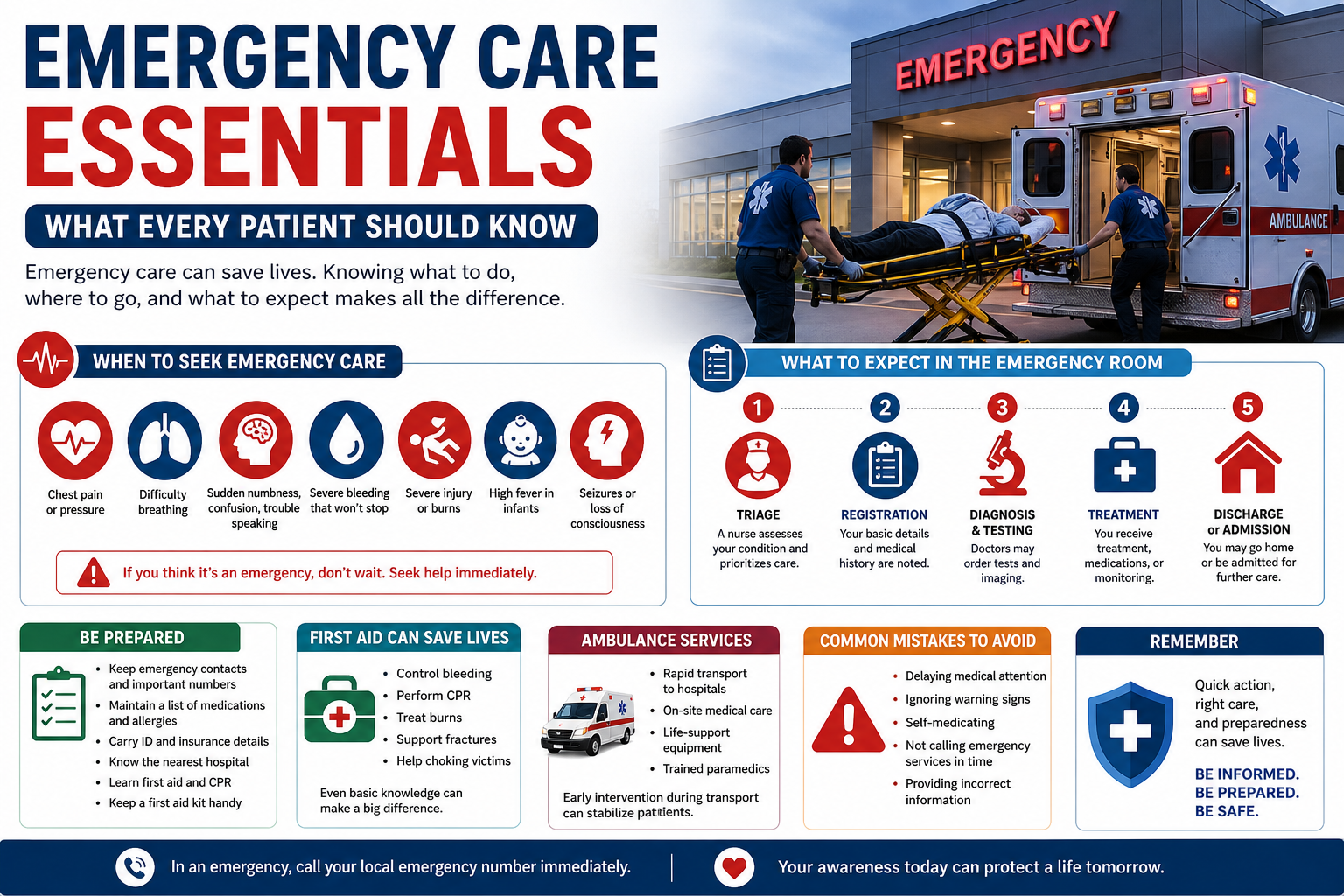
Knowing when to seek emergency care is essential. Some situations demand immediate attention, including:
- Chest pain or pressure (possible heart attack)
- Difficulty breathing or shortness of breath
- Severe bleeding that won’t stop
- Sudden weakness, numbness, or difficulty speaking (possible stroke)
- Loss of consciousness
- Severe burns or injuries
- High fever in infants or elderly individuals
- Seizures
Ignoring these symptoms can lead to serious complications or even death.
Emergency vs Urgent Care: Understanding the Difference
Many patients confuse emergency care with urgent care. Here’s a simple breakdown:
Emergency Care:
- Life-threatening conditions
- Available 24/7
- Equipped for advanced life-saving procedures
Urgent Care:
- Non-life-threatening issues
- Minor injuries like sprains, cuts, or mild infections
- Shorter wait times and lower costs
Choosing the right facility saves time and ensures proper treatment.
What Happens in the Emergency Room?
When you arrive at an emergency room, the process typically includes:
1. Triage:
A nurse assesses your condition and prioritizes care based on severity.
2. Registration:
Basic details and medical history are recorded.
3. Diagnosis and Testing:
Doctors may order blood tests, imaging (X-ray, CT scan), or other diagnostics.
4. Treatment:
Immediate care is provided, which may include medication, surgery, or monitoring.
5. Discharge or Admission:
Depending on your condition, you may be sent home or admitted for further treatment.
How to Prepare for a Medical Emergency
Being prepared can save precious time. Here are essential steps:
- Keep a list of emergency contacts
- Maintain a record of medications and allergies
- Carry identification and insurance details
- Know the nearest hospital location
- Learn basic first aid and CPR
- Keep a first aid kit at home and in your vehicle
Preparedness reduces panic and improves response time.
Role of Ambulance Services
Ambulances play a vital role in emergency care by providing:
- Rapid transport to hospitals
- On-site medical care
- Life-support equipment
- Trained paramedics
In many cases, early intervention during transport can stabilize patients before reaching the hospital.
Importance of First Aid Knowledge
First aid is often the first step in emergency care. Basic knowledge can help you:
- Control bleeding
- Perform CPR
- Treat burns or fractures
- Assist choking victims
Even minimal training can make a significant difference while waiting for professional help.
Common Mistakes to Avoid in Emergencies
Patients and caregivers often make mistakes that can worsen situations:
- Delaying medical attention
- Ignoring warning signs
- Self-medicating without proper diagnosis
- Not calling emergency services in time
- Providing incorrect patient information
Avoiding these mistakes improves survival rates and recovery outcomes.
Cost and Insurance Considerations
Emergency care can be expensive, but it is necessary. Key points to remember:
- Most insurance plans cover emergency services
- Government hospitals may offer lower-cost care
- Always keep insurance details accessible
- Ask for billing details and clarification
Understanding financial aspects helps reduce stress during emergencies.
Special Considerations for Children and Elderly
Certain groups require extra attention:
Children:
- Rapid changes in condition
- Difficulty expressing symptoms
Elderly:
- Multiple health conditions
- Higher risk of complications
Caregivers should be especially vigilant and act quickly when symptoms arise.
Mental Health Emergencies
Emergency care isn’t limited to physical health. Mental health crises such as:
- Severe anxiety or panic attacks
- Suicidal thoughts
- Psychotic episodes
also require immediate attention. Many hospitals now provide specialized psychiatric emergency services.
Technology in Emergency Care
Modern emergency care uses advanced technologies like:
- Telemedicine for remote consultations
- AI-assisted diagnostics
- Electronic health records
- Portable monitoring devices
These innovations improve speed, accuracy, and patient outcomes.
Conclusion
Emergency care is an essential part of the healthcare system that everyone should understand. Recognizing warning signs, knowing where to go, and being prepared can save lives. While emergencies are unpredictable, your response doesn’t have to be. Staying informed and proactive ensures better outcomes for you and your loved ones.
FAQs
Q1. What is the difference between emergency and urgent care?
Emergency care is for life-threatening conditions, while urgent care handles minor illnesses and injuries.
Q2. When should I call an ambulance?
Call an ambulance if the patient is unconscious, having chest pain, difficulty breathing, or severe injury.
Q3. What should I carry to the emergency room?
Carry ID, insurance card, medication list, and emergency contacts.
Q4. Are emergency services available 24/7?
Yes, hospital emergency departments operate круглосуточно (24/7).
Q5. Can I go to emergency care without insurance?
Yes, hospitals must provide emergency treatment regardless of insurance status.