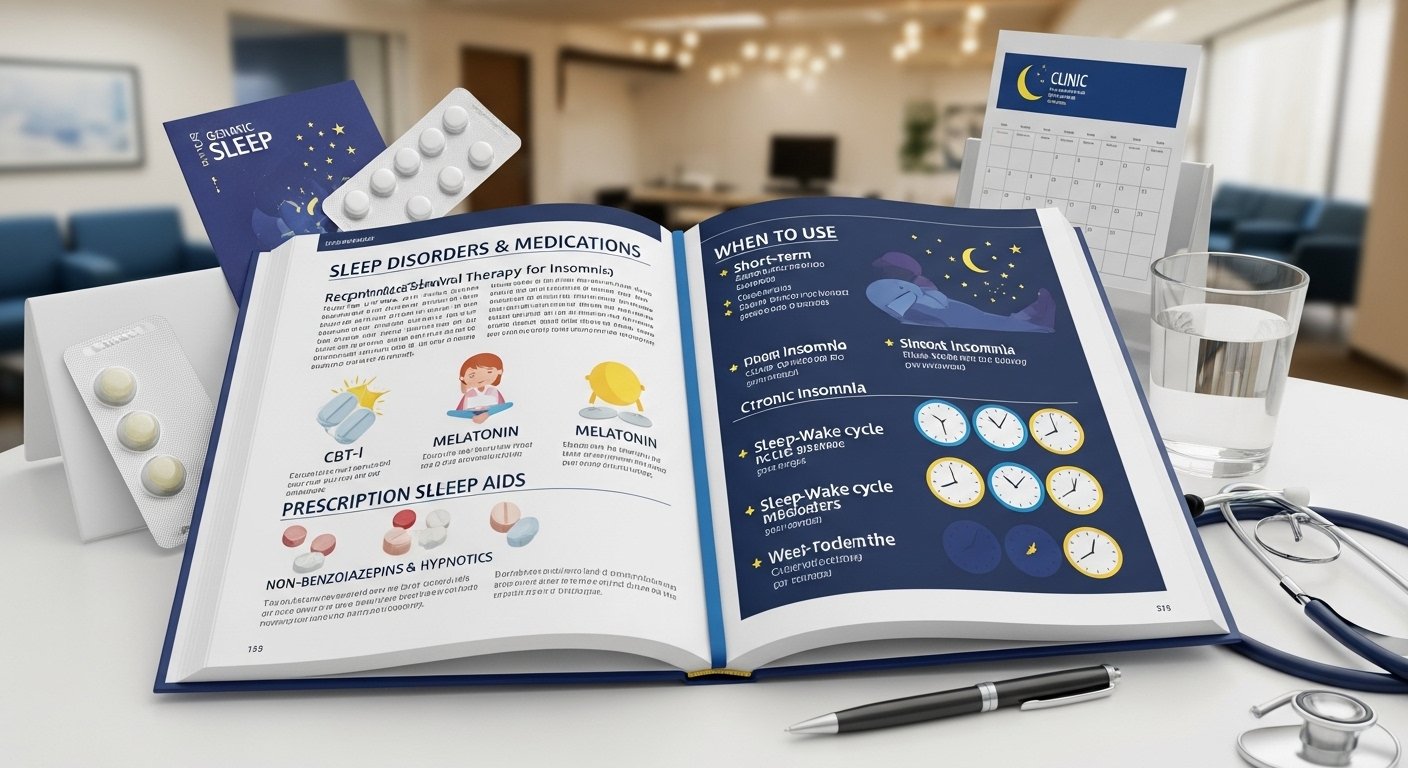

Insomnia — defined as difficulty initiating or maintaining sleep, or non-restorative sleep, occurring at least three nights per week for at least three months — affects approximately 10–30% of adults and is one of the most common complaints in primary care. Despite the reflexive patient expectation of a sleeping pill, current clinical guidelines consistently recommend cognitive behavioral therapy for insomnia (CBT-I) as the first-line treatment, with pharmacotherapy reserved for specific situations. This guide explains the clinical approach to insomnia management and when sleep medications are appropriately prescribed.
CBT-I: First-Line Insomnia Treatment
CBT-I is a structured, 6–8 session therapeutic program addressing the thoughts and behaviors that perpetuate chronic insomnia. Key components include: sleep restriction therapy (temporarily limiting time in bed to the actual sleep time, consolidating sleep efficiency); stimulus control (re-associating the bed with sleep, not arousal or wakefulness); sleep hygiene education; relaxation techniques; and cognitive restructuring of unhelpful insomnia-related beliefs. CBT-I produces durable improvement in 70–80% of patients — superior to medications and without rebound insomnia upon discontinuation. Digital CBT-I programs (Sleepio, SomRyst) extend access beyond face-to-face therapy.
Pharmacological Options When Indicated
Melatonin Receptor Agonists
Ramelteon (Rozerem) and low-dose melatonin — target circadian rhythm rather than sedating the nervous system. Minimal next-day sedation, no dependence or abuse potential. Most useful for sleep onset difficulties and circadian rhythm disorders.
Orexin Receptor Antagonists
Suvorexant (Belsomra) and lemborexant (Dayvigo) — block the wakefulness-promoting orexin system. Effective for both sleep onset and sleep maintenance insomnia with a more favorable safety profile than benzodiazepines. Preferred pharmacological option when medication is indicated.
Sedating Antidepressants
Low-dose doxepin (Silenor) is FDA-approved for sleep maintenance insomnia. Low-dose trazodone is widely used off-label. Both are appropriate when insomnia co-occurs with depression.
Benzodiazepines and Z-drugs
Temazepam, triazolam, zolpidem, eszopiclone — effective short-term but carry significant risks: next-day impairment, tolerance, dependence, rebound insomnia on discontinuation, and in older adults, increased fall and cognitive impairment risk. Appropriate for short-term use (1–2 weeks maximum) in specific clinical situations, not chronic insomnia treatment.
Conclusion
Chronic insomnia requires behavioral treatment — CBT-I — not indefinite sedative-hypnotic prescribing. When medication is needed, prefer safer non-benzodiazepine options with lower dependence risk. If your insomnia is being managed with nightly benzodiazepines or Z-drugs long-term, discuss transitioning to CBT-I with your clinic — the discontinuation process is manageable and the long-term outcomes significantly better than continued medication.
FAQs – Sleep Medications
Q1. Is melatonin effective for insomnia?
A: Melatonin is most effective for circadian rhythm disorders (jet lag, shift work disorder, delayed sleep phase disorder). For chronic insomnia not related to circadian disruption, melatonin has modest evidence at best. Low doses (0.5–5mg) timed appropriately for the desired sleep phase are more effective than the very high doses in many supplements.
Q2. Why are benzodiazepines problematic for long-term sleep use?
A: Tolerance develops rapidly (usually within 2–4 weeks), requiring dose escalation for the same effect. Physical dependence follows, making discontinuation difficult due to withdrawal symptoms and rebound insomnia. Long-term use is associated with cognitive impairment, impaired motor function, and significantly increased fall risk in older adults — without the sleep quality improvement patients expect.
Q3. What are sleep hygiene recommendations?
A: Key sleep hygiene practices: consistent wake and sleep times; avoiding screens 30–60 minutes before bed; keeping the bedroom cool, dark, and quiet; avoiding caffeine after noon; avoiding alcohol (which disrupts sleep architecture); regular exercise (not within 2 hours of bedtime); avoiding napping; and limiting time in bed to actual sleep time.
Q4. Can over-the-counter sleep aids be used long-term?
A: Most OTC sleep aids contain diphenhydramine (antihistamine) — effective for short-term use but causing rapid tolerance, significant next-day sedation, anticholinergic side effects (dry mouth, urinary retention, constipation), and cognitive impairment with regular use. They are not recommended for older adults and should not be used long-term by anyone. Beers Criteria explicitly lists diphenhydramine as potentially inappropriate in older adults.
Q5. What conditions can cause insomnia?
A: Many conditions cause or contribute to insomnia: depression and anxiety, chronic pain, sleep apnea (disrupted sleep from breathing pauses), restless legs syndrome, GERD, nocturia (frequent nighttime urination), hyperthyroidism, and stimulating medications (steroids, decongestants, some antidepressants). Treating the underlying condition is often more effective than treating the insomnia symptom directly.