
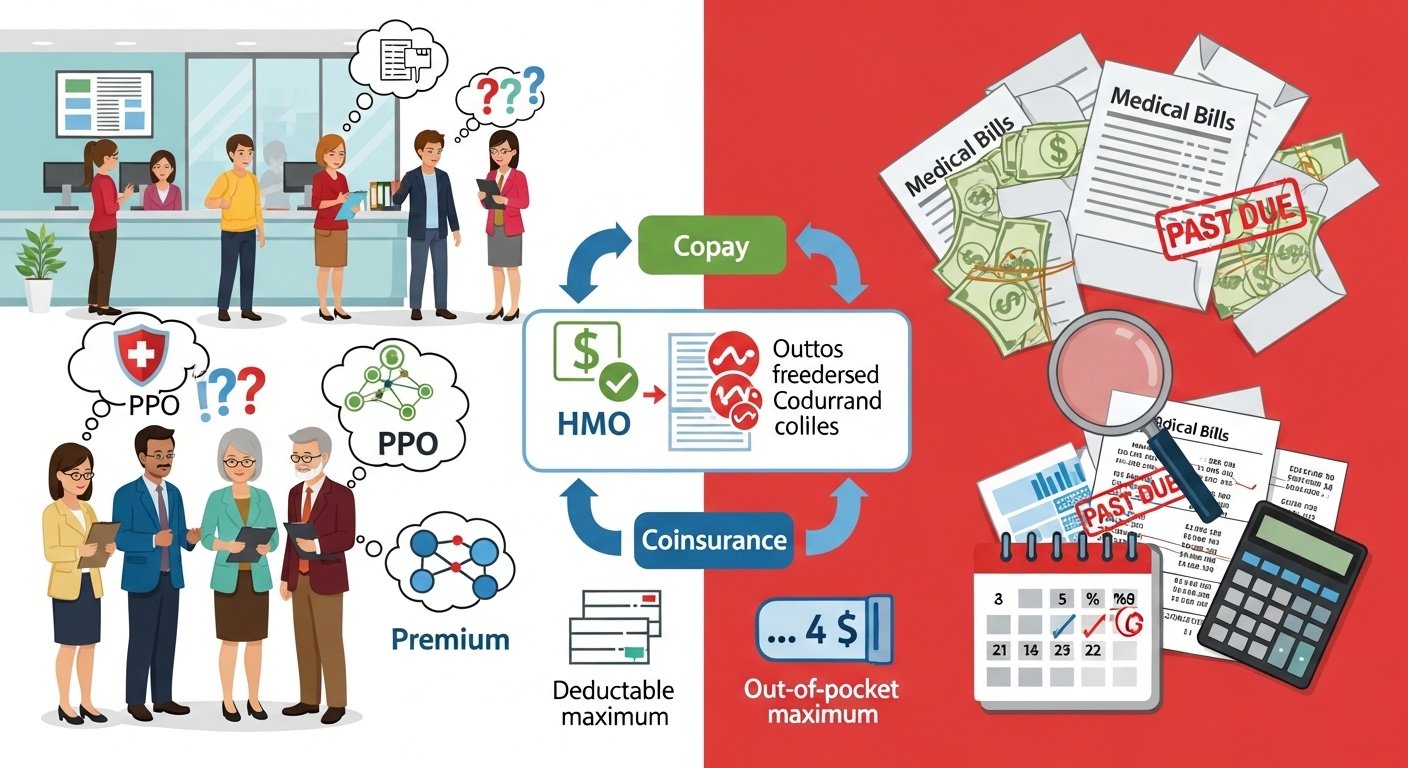

The intersection of healthcare and insurance in the United States is notoriously complex — with deductibles, copays, coinsurance, prior authorizations, network restrictions, and explanation of benefits documents creating a system that bewilders even savvy healthcare consumers. Understanding the basic structure of health insurance and how it applies to clinic visits helps you use your benefits effectively, avoid unexpected costs, and advocate for yourself when billing problems arise. This guide explains health insurance fundamentals in the clinic context.
Key Insurance Terms
Premium — the monthly cost you pay for insurance coverage regardless of whether you use services. Deductible — the amount you pay before insurance begins covering costs. For example, with a $2,000 deductible, you pay the first $2,000 of covered services annually. Copay — a fixed amount you pay per service ($30 for a primary care visit). Coinsurance — a percentage you pay after meeting your deductible (you pay 20%, insurance pays 80%). Out-of-pocket maximum — the most you will pay in a year before insurance covers 100%. In-network vs. out-of-network — using providers in your insurance plan’s contracted network versus outside it, with significantly higher costs for out-of-network care.
Prior Authorization
Many insurance plans require prior authorization — advance approval from the insurer — for certain procedures, specialty referrals, medications, and imaging studies before they are covered. Your clinic initiates prior authorization requests on your behalf, but approval is not guaranteed. Denial of prior authorization can be appealed — a process your clinic’s staff can help navigate. The No Surprises Act and evolving CMS regulations are addressing prior authorization burden and timelines.
Understanding Your Clinic Bill
Clinic bills typically include: the explanation of benefits (EOB) from your insurance showing what was billed, what insurance paid, and what you owe; the actual clinic invoice for the patient responsibility amount. Review both documents — billing errors are common, and understanding what you owe versus what was billed helps you identify discrepancies. Ask about payment plans if you cannot pay in full — most clinics offer them.
Financial Assistance
If you are uninsured or underinsured, most clinics have financial assistance programs. Federally Qualified Health Centers (FQHCs) use a sliding fee scale based on income. Hospital financial assistance (charity care) programs are required by law for nonprofit hospitals and may apply to affiliated clinics. Apply for financial assistance before bills go to collections — the process is much simpler when initiated proactively.
Conclusion
Health insurance complexity is a genuine barrier to care for many Americans. Understanding your specific plan’s cost-sharing structure, confirming network status before scheduling appointments, pursuing financial assistance when needed, and carefully reviewing bills for errors are the practical steps that protect your financial health alongside your physical health.
FAQs – Health Insurance and Clinics
Q1. What does “in-network” mean and why does it matter?
A: In-network providers have contracted with your insurance company to accept discounted rates. Your insurance covers a larger share of the cost for in-network services. Out-of-network providers have no contracted rate agreement — you may pay substantially more, and some plans provide no out-of-network coverage except for emergencies.
Q2. Why am I billed months after my clinic visit?
A: Healthcare billing involves multiple steps — coding, claim submission, insurance processing, payment posting, and patient billing — that take weeks to months to complete. The bill you receive may reflect insurance payment that has already been applied, leaving only your cost-sharing responsibility. The timing often appears surprisingly delayed relative to the service date.
Q3. Can I negotiate my medical bill?
A: Yes. Medical billing is more negotiable than most people realize. Uninsured patients can often receive significant discounts by asking for the insured rate or the Medicare rate. Billing departments can sometimes reduce amounts for prompt cash payment or financial hardship. It always worth asking.
Q4. What is a high-deductible health plan (HDHP) and is it right for me?
A: An HDHP has lower premiums but higher deductibles (minimum $1,600 individual/$3,200 family in 2024). They pair with Health Savings Accounts (HSAs), allowing tax-free saving for healthcare costs. HDHPs make financial sense for generally healthy people who rarely use healthcare; they can create financial hardship for those with significant healthcare needs who must meet a high deductible before insurance covers costs.
Q5. What is the No Surprises Act?
A: The No Surprises Act (effective January 2022) protects patients from unexpected bills from out-of-network providers in in-network facilities — most commonly from anesthesiologists, radiologists, and emergency physicians who are out-of-network at in-network hospitals. Patients can only be charged in-network cost-sharing amounts for these services.