
Medication errors — the wrong medication, wrong dose, wrong patient, or failure to consider drug interactions — are one of the most common and preventable causes of patient harm in healthcare. The clinic setting is where most prescriptions originate, and where patient-provider communication can either prevent or create medication errors. Understanding how medication errors happen and what you can do to help prevent them protects your safety at every clinic encounter. This guide explains medication safety at the clinic level.
The Medication Reconciliation Process
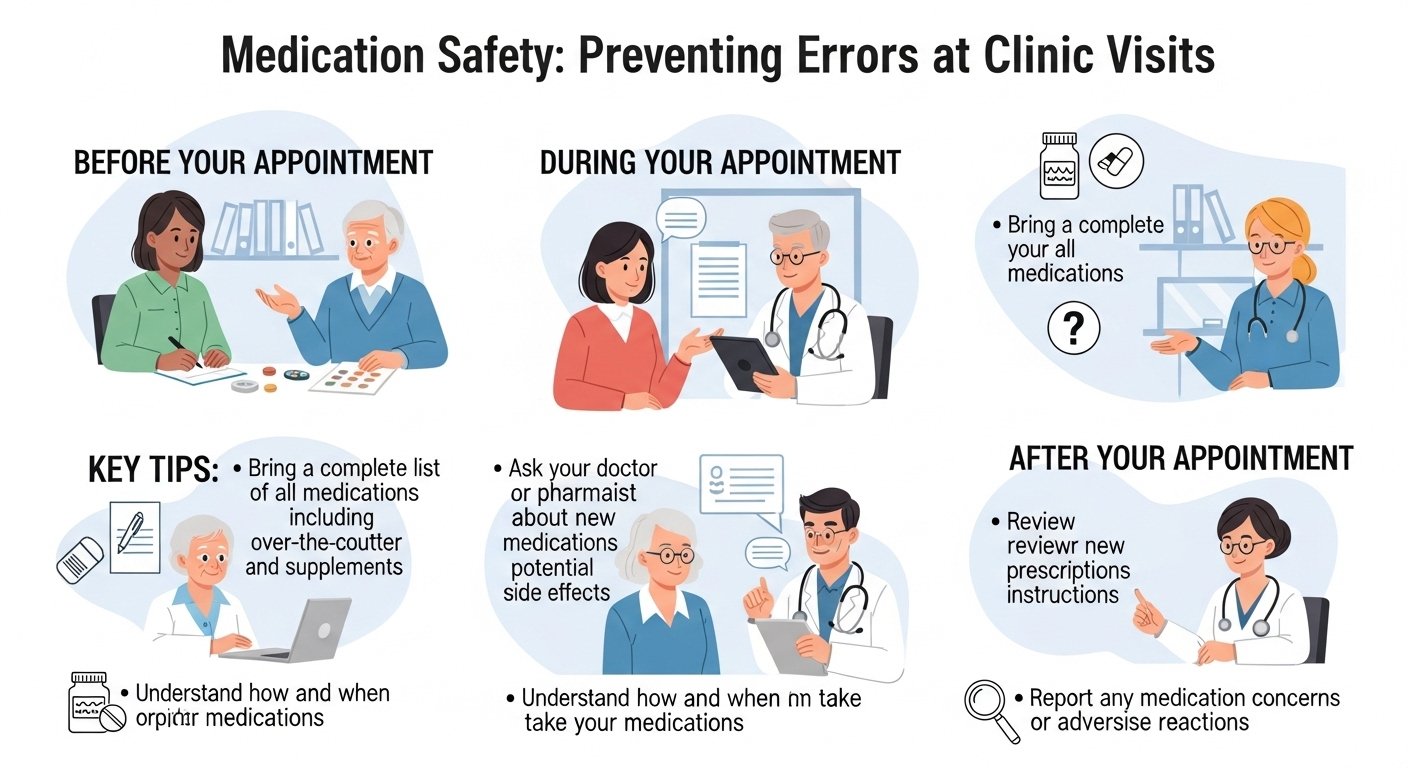
Medication reconciliation — comparing the patient’s current medication list against all orders and prescriptions at transitions of care (admission, discharge, clinic visits) — is the primary system-level strategy for preventing medication errors. At every clinic visit, confirming that the medication list is complete and accurate is the foundation of safe prescribing. Patients can actively support this process by bringing a complete, current medication list (or the actual medication bottles) to every appointment.
Common Medication Errors and How to Prevent Them
Omission of Medications
Medications stopped at hospital discharge but not restarted, or started by one provider without the primary care provider’s knowledge, create dangerous gaps or duplications. Review your complete medication list at every clinic visit and report any recent medication changes made by other providers.
Drug-Drug Interactions
Combining medications that interact can cause dangerous effects. Pharmacy dispensing software flags major interactions, but polypharmacy (many medications) and prescriptions from multiple providers increase interaction risk. Tell every provider — including dentists, urgent care, and telehealth providers — about all medications you take.
Dose Errors
Misread prescriptions, look-alike/sound-alike medication names, and decimal point errors cause dangerous dose mistakes. Confirm with your pharmacist the expected dose and confirm the dose before taking any new medication.
Patient Strategies for Medication Safety
- Bring a complete medication list to every appointment — including OTC medications, supplements, and vitamins
- Use one pharmacy for all prescriptions when possible (one pharmacist sees your complete medication profile)
- Read the pharmacy label and counseling sheet when picking up new medications
- Ask the pharmacist what each new medication is for, how to take it, and what side effects to watch for
- Never crush, cut, or chew extended-release tablets unless specifically told it is safe
- Report all allergies and past medication reactions at every clinic visit
Conclusion
Medication safety is a shared responsibility between patients, prescribers, and pharmacists. Your active participation — maintaining an accurate medication list, informing all providers of all medications, and asking questions about new prescriptions — is the most powerful patient-level safety strategy available. Never be embarrassed to ask your provider or pharmacist to repeat, clarify, or write down medication instructions.
FAQs – Medication Safety
Q1. What should I do if I think I’ve taken the wrong medication or dose?
A: Call Poison Control (1-800-222-1222) immediately for guidance — they assess the specific risk based on the medication, dose, your weight, and health status, and direct you to the appropriate level of care. Do not wait to see if symptoms develop before calling.
Q2. Are generic medications as safe as brand-name drugs?
A: Yes. FDA generic drug approval requires demonstration of bioequivalence — the generic must deliver the same amount of active drug at the same rate as the brand-name product. Generic medications are equally safe and effective for the vast majority of patients and conditions. Some narrow therapeutic index medications may require monitoring when switching between formulations.
Q3. What is a medication allergy versus a side effect?
A: A medication allergy involves an immune-mediated reaction — hives, facial swelling, anaphylaxis. Side effects are non-immune reactions that are predictable consequences of the medication’s pharmacological action (nausea, drowsiness, headache). Both should be documented in your medical record, but the clinical response differs — allergies typically mandate drug avoidance; side effects may be manageable with dose adjustment or alternative medications.
Q4. What is polypharmacy and why is it dangerous?
A: Polypharmacy — typically defined as taking five or more medications — dramatically increases the risk of drug interactions, adverse effects, medication errors, and non-adherence. In older adults, reducing unnecessary medications (deprescribing) is a key safety strategy. Review your complete medication list with your provider at least annually to identify medications that are no longer needed or that may be causing harm.
Q5. Can herbal supplements interact with prescription medications?
A: Yes. Many herbs have real pharmacological activity that interacts with drugs. St. John’s Wort reduces the effectiveness of many medications including anticoagulants, oral contraceptives, and antiretrovirals. Ginkgo and garlic increase bleeding risk with anticoagulants. Always tell your provider about all supplements — the category “natural” does not mean “safe with all medications.”