

Nurses are the backbone of medical clinic operations — providing direct patient care, coordinating clinical workflows, communicating between patients and physicians, administering medications and vaccines, and managing the complex logistics of clinic-based healthcare delivery. Despite their central role, patients often underestimate the scope and depth of what nurses contribute to their clinical care. This guide explains the multifaceted contributions of nurses in medical clinic settings and why the nurse-patient relationship matters to health outcomes.
Types of Clinic Nurses
Registered Nurses (RNs)
Registered nurses in clinic settings conduct initial patient assessments, obtain vital signs, take medical histories, administer medications and vaccines, perform clinical procedures (phlebotomy, wound care, nebulizer treatments, EKG), provide patient education, and coordinate care between clinical team members and external providers.
Licensed Practical Nurses (LPNs)
Providing direct clinical support under RN supervision — vital sign measurement, basic clinical procedures, and patient assistance. In many outpatient clinics, LPNs perform the majority of clinical support functions under RN oversight.
Nurse Practitioners (NPs)
Advanced practice registered nurses who have completed graduate-level training and can independently diagnose, treat, and prescribe — functioning as primary care providers, specialty care providers, and urgent care providers. NPs provide care equivalent in quality to physician care for primary care and many specialty care conditions.
The Nursing Role in Patient Safety
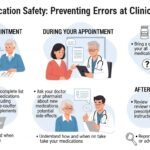
Nurses are the primary patient safety net in clinical settings — identifying medication errors before they reach patients, recognizing early signs of deterioration, conducting pre-procedure safety checks, and advocating for patients when clinical concerns are not being addressed. The nurse-to-patient ratio and nursing skill mix directly affect patient safety outcomes across all healthcare settings.
Patient Education
Nurses provide the majority of patient education in most clinic settings — explaining diagnoses, teaching medication administration technique (inhaler use, insulin injection, self-injection for biologics), wound care instructions, and post-procedure guidance. This education directly affects patient outcomes — medication adherence, proper technique, and appropriate symptom recognition are all improved by effective nursing education.
Conclusion
The nurse you interact with at your clinic visit is a skilled healthcare professional whose contributions to your care are substantial and evidenced. Build a respectful relationship with the clinical nursing team — they often have more direct patient contact time than the physician and are powerful advocates for your needs within the clinical team. When nurses ask detailed questions or take thorough histories, they are not being overly bureaucratic — they are doing their job to ensure your safety.
FAQs – Nurses in Clinics
Q1. Can I ask a nurse clinical questions during my visit?
A: Yes. Clinic nurses are appropriate sources for many clinical questions — medication instructions, wound care guidance, vaccination information, and many aspects of chronic disease management are within nursing scope and expertise. For diagnosis and treatment decisions, the physician or advanced practice provider is the appropriate source.
Q2. What is the difference between an RN and an NP?
A: An RN (Registered Nurse) provides direct nursing care under physician supervision or according to standing orders. An NP (Nurse Practitioner) has completed advanced graduate training (typically a Master’s or Doctoral degree) and can independently diagnose, treat, and prescribe — they function as independent primary or specialty care providers.
Q3. Can nurses prescribe medications?
A: Registered nurses can administer medications ordered by physicians and advanced practice providers. Nurse practitioners (advanced practice nurses) can prescribe medications independently in most states — the scope of their independent prescribing authority varies by state law.
Q4. What does “triage” mean and why do nurses do it?
A: Triage (from the French for “sorting”) is the process of assessing and prioritizing patients based on urgency. Clinic nurses triage telephone calls and arriving patients to determine how quickly they need clinical attention. Structured triage protocols (like the Emergency Severity Index in emergency settings) ensure the most urgent patients are seen first.
Q5. Should I talk to the nurse about concerns my doctor didn’t address?
A: Yes — particularly for concerns about medication side effects, symptoms between appointments, care coordination questions, and practical implementation of your care plan. Many clinics have nurse triage lines specifically for these types of questions. Patient portal messages to the nursing team are also an effective communication channel for clinical questions that don’t require a physician response.