
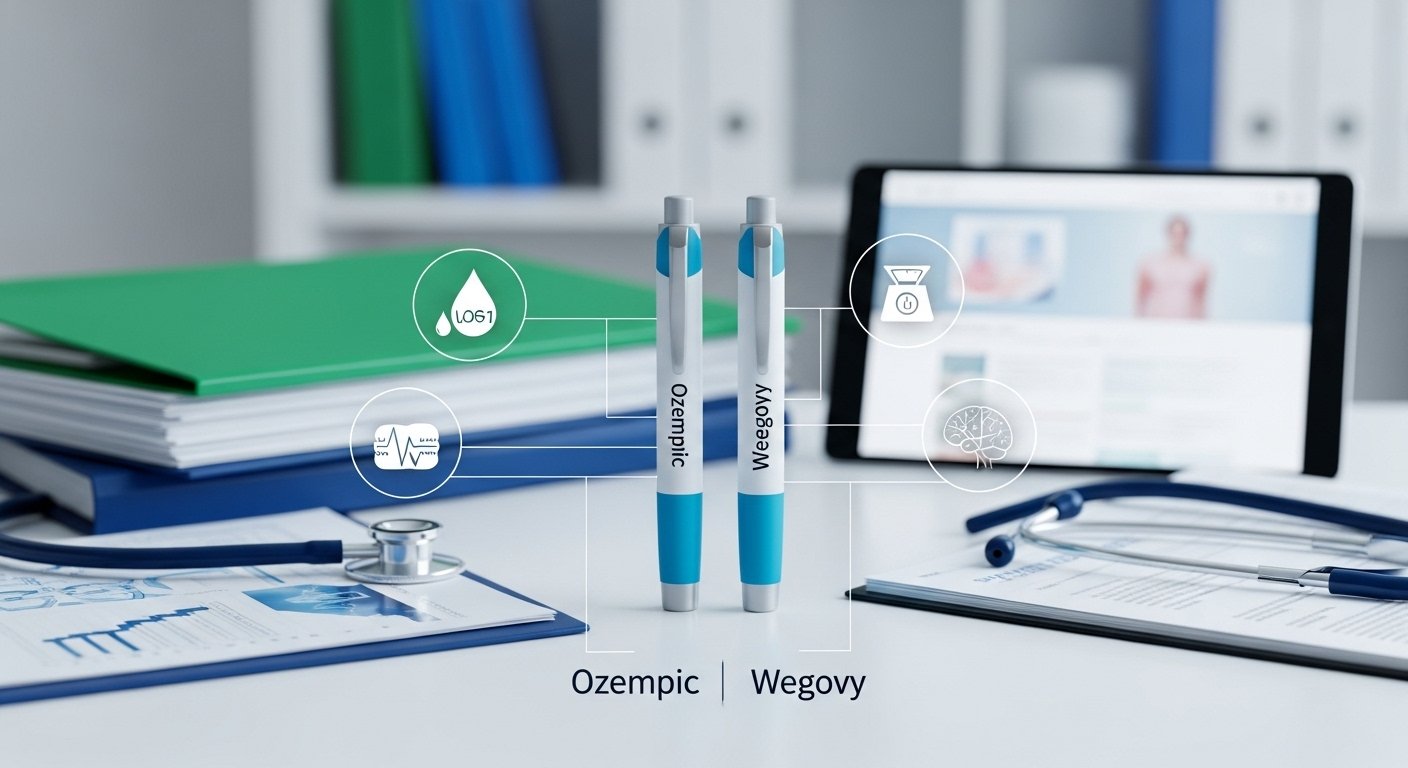

GLP-1 receptor agonists — the class of medications that includes semaglutide (Ozempic for diabetes, Wegovy for obesity), liraglutide (Victoza for diabetes, Saxenda for obesity), and tirzepatide (Mounjaro for diabetes, Zepbound for obesity) — have rapidly become among the most prescribed and most discussed medications in medicine. Their unprecedented weight loss results and cardiovascular benefits have generated enormous public interest, outpacing supply, driving significant off-label use, and creating widespread confusion about appropriate medical use. This guide explains what clinics know about GLP-1 medications and how they are appropriately prescribed.
How GLP-1 Medications Work
GLP-1 (glucagon-like peptide-1) is an intestinal hormone released after eating that stimulates insulin secretion, suppresses glucagon (which raises blood sugar), slows gastric emptying (reducing hunger), and acts on brain appetite centers to reduce food cravings and intake. GLP-1 receptor agonists mimic these effects — producing glucose-lowering (helpful in Type 2 diabetes) and weight reduction (by reducing appetite and caloric intake) simultaneously.
Approved Indications
Ozempic (semaglutide 0.5–2mg weekly injection) and Mounjaro (tirzepatide 5–15mg weekly injection) are approved for Type 2 diabetes management. Wegovy (semaglutide 2.4mg weekly injection) and Zepbound (tirzepatide 5–15mg weekly injection) are approved for chronic weight management in adults with BMI ≥30 or ≥27 with a weight-related condition. Ozempic and Victoza (liraglutide) have established cardiovascular event reduction data in high-risk cardiovascular patients with Type 2 diabetes.
Important Clinical Considerations
GLP-1 medications require gradual dose escalation to minimize GI side effects (nausea, vomiting, diarrhea). They are contraindicated in patients with personal or family history of medullary thyroid cancer or MEN2 syndrome. They require monitoring of kidney function. They are not appropriate for Type 1 diabetes. Weight loss is maintained only with continued medication — stopping the medication typically leads to weight regain. Drug shortages have been a significant access issue due to unprecedented demand.
Conclusion
GLP-1 medications represent a genuine breakthrough in the pharmacological treatment of Type 2 diabetes and obesity — among the most effective and evidence-based tools available for these conditions. They are not appetite suppressant diet pills — they are legitimate disease-modifying treatments for serious chronic conditions. Discuss with your clinic whether a GLP-1 medication is appropriate for your specific situation, underlying conditions, and treatment goals.
FAQs – GLP-1 Medications
Q1. Can I take Ozempic for weight loss even if I don’t have diabetes?
A: Ozempic is FDA-approved for Type 2 diabetes, not weight loss. Using Ozempic for weight loss without diabetes is off-label. The appropriate on-label weight loss prescription is Wegovy (the higher-dose semaglutide product). Some clinicians prescribe Ozempic off-label for weight loss when Wegovy is unavailable due to shortage. This should be an informed clinical decision, not simply obtaining Ozempic for aesthetic weight loss.
Q2. How much weight can someone expect to lose on semaglutide?
A: Clinical trial participants on Wegovy (semaglutide 2.4mg) achieved approximately 15% average total body weight loss over 68 weeks — substantially more than any previously available anti-obesity medication. Approximately one-third of participants achieved 20% or more weight loss. Individual results vary based on adherence, lifestyle factors, and biological response.
Q3. Are GLP-1 medications safe long-term?
A: GLP-1 medications have been in clinical use for over 15 years (liraglutide since 2010) with good long-term safety profiles. They are among the most studied medications in cardiovascular outcomes trials. Ongoing pharmacovigilance continues to evaluate safety signals. The benefit-risk profile for approved indications is favorable.
Q4. Why are GLP-1 medications so expensive?
A: Brand-name GLP-1 medications (Ozempic, Wegovy, Mounjaro, Zepbound) cost $900–$1,400 per month without insurance coverage. Insurance coverage for diabetes indications is typically good; obesity indications have more variable coverage. Employer health plans are increasingly covering anti-obesity medications. Generic semaglutide is not yet approved in the US; compounded semaglutide (available during shortage periods) is controversial regarding safety and efficacy standards.
Q5. Do GLP-1 medications affect alcohol use?
A: Many patients on GLP-1 medications report reduced alcohol cravings and consumption — possibly related to GLP-1’s effects on reward pathways in the brain. Research into GLP-1 medications for alcohol use disorder is ongoing. This is an area of active clinical interest, not yet a standard approved indication.