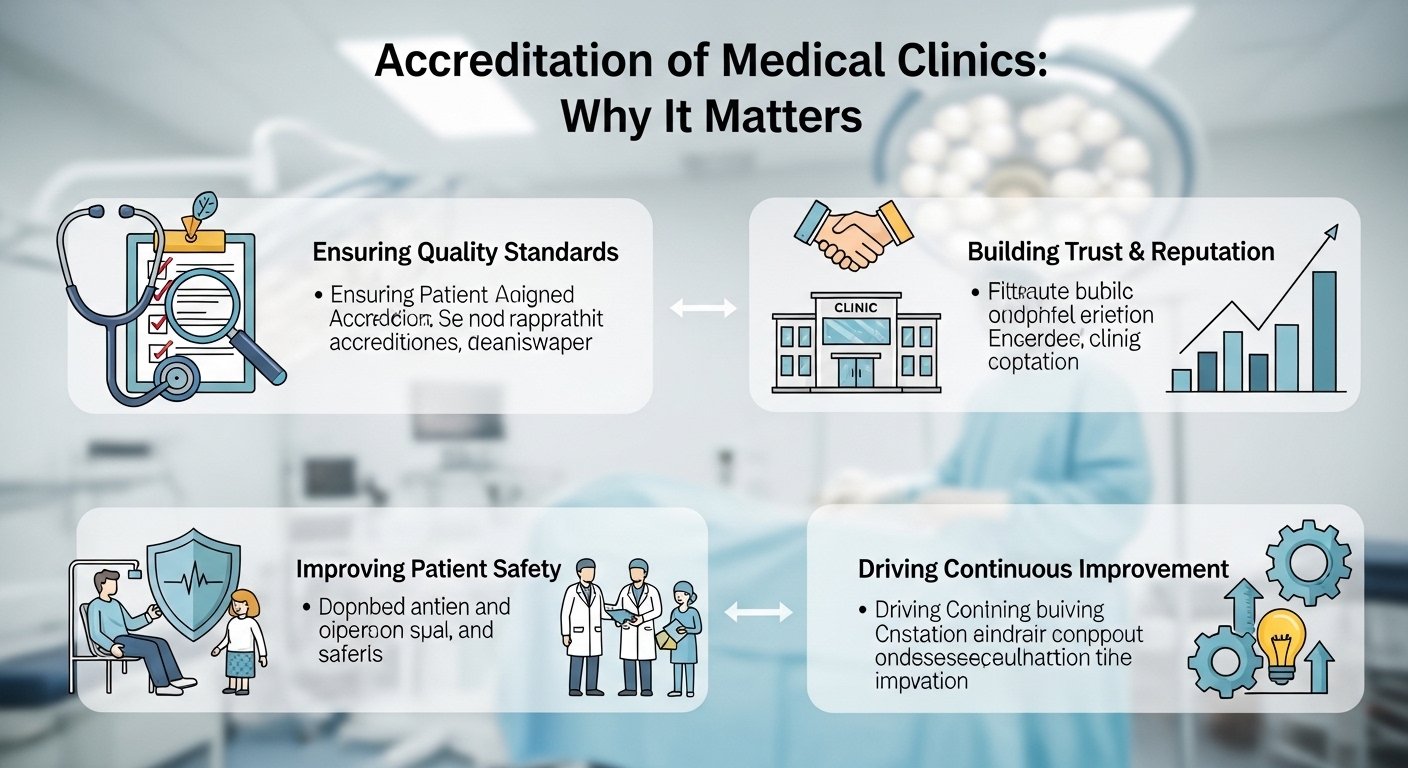

Clinical accreditation — the process by which an independent accreditation organization evaluates a healthcare clinic against established standards and certifies that it meets those standards — serves as an external validation of clinic quality and safety. While accreditation is voluntary for most outpatient clinic settings (unlike hospitals, which require accreditation for Medicare participation), it signals commitment to evidence-based practices, patient safety, and continuous quality improvement. This guide explains major accreditation organizations and why accreditation matters for patients.
Major Accreditation Organizations
The Joint Commission (TJC)
The most recognized accreditation organization — accrediting hospitals, ambulatory care, behavioral health, home care, laboratory, and other settings against comprehensive standards across patient safety, quality of care, environment of care, and organizational leadership. Joint Commission accreditation requires triennial on-site surveys and continuous compliance monitoring.
NCQA (National Committee for Quality Assurance)
Accredits health plans, medical homes (Patient-Centered Medical Home recognition), and other healthcare organizations using standards focused on care quality, patient engagement, and population health. NCQA PCMH recognition is the most widely recognized designation for primary care quality.
AAAHC (Accreditation Association for Ambulatory Health Care)
Accredits ambulatory surgery centers, endoscopy centers, urgent care clinics, and other outpatient settings with standards specific to ambulatory care safety and quality.
URAC
Accredits health plans, specialty pharmacy, case management, and other specialized organizations with sector-specific standards.
What Accreditation Means for Patients
Accredited clinics have demonstrated to an independent organization that they maintain specific standards for: physical environment and infection control, clinical quality processes, patient rights, medication safety, credentialing of providers, and quality improvement programs. Accreditation does not guarantee perfect care — it establishes that minimum standards are met and quality improvement systems are in place. It is one important indicator of clinic quality, best used alongside quality measure performance and patient experience data.
Conclusion
When choosing a medical clinic or surgery center, checking accreditation status is a simple quality indicator worth including in your evaluation. Most accreditation organizations maintain searchable directories of accredited facilities on their websites. Accreditation represents a clinic’s commitment to external accountability and evidence-based practice standards.
FAQs – Clinic Accreditation
Q1. Is my doctor’s clinic accredited?
A: You can check accreditation status through accreditation organization directories: The Joint Commission Quality Check (qualitycheck.org), NCQA’s website (ncqa.org), and AAAHC’s directory (aaahc.org). Many clinics display accreditation logos in their facility and on their websites.
Q2. Are unaccredited clinics unsafe?
A: Not necessarily — many excellent clinics are not accredited, particularly small independent practices that may meet all quality standards without seeking formal external validation. Accreditation is most important for higher-risk settings (surgery centers, urgent care performing procedures) where independent safety oversight is more critical.
Q3. What happens during a Joint Commission survey?
A: Joint Commission surveyors (unannounced for most settings) review clinical records, interview staff and patients, observe clinical processes, inspect the physical environment, and assess compliance with specific standards. Deficiencies identified during surveys are cited and must be corrected within a defined timeframe. Major deficiencies can result in denial or revocation of accreditation.
Q4. Does accreditation affect what insurance covers at a clinic?
A: For some insurers and in some clinical settings, accreditation affects reimbursement. Ambulatory surgery centers, for example, may require accreditation for Medicare participation. For most outpatient primary care clinics, accreditation status doesn’t directly affect insurance coverage.
Q5. What is Deemed Status?
A: CMS (Centers for Medicare and Medicaid Services) grants “deemed status” to hospitals accredited by approved organizations (including The Joint Commission), allowing accreditation to substitute for CMS’s own Medicare Conditions of Participation surveys. This reduces regulatory burden while maintaining standards accountability.