
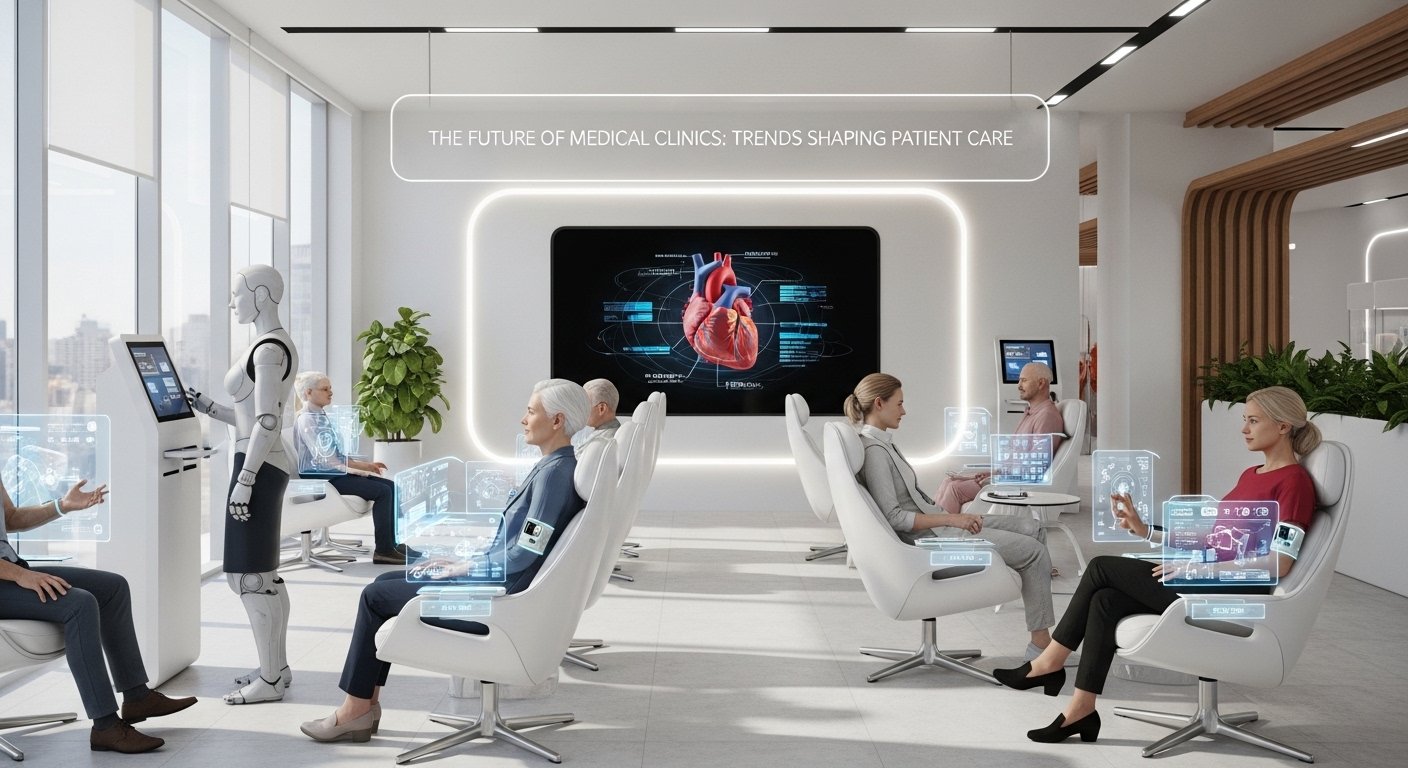

Medical clinics are transforming rapidly — driven by technological innovation, shifting demographic needs, evolving payment models, and lessons learned from the COVID-19 pandemic. Understanding the trends shaping the future of clinic-based care helps patients anticipate changes, adapt to new care delivery models, and engage with innovations that expand access and improve outcomes. This guide explores the major trends defining the future of medical clinic care.
Hybrid Care Models
The future clinic will be a hybrid of in-person, telehealth, and asynchronous digital care — with different modalities used for different clinical needs rather than all care defaulting to in-person visits. Routine chronic disease management, medication management, results review, and minor acute concerns increasingly move to telehealth, freeing in-person appointments for examinations, procedures, and complex new presentations that genuinely require physical presence. Remote patient monitoring extends clinical reach into the home continuously rather than in episodic visit snapshots.
AI-Augmented Clinical Care
AI will increasingly support clinical workflows — from ambient documentation that eliminates note-typing burden to predictive analytics identifying deteriorating patients before clinically apparent, from AI-assisted imaging interpretation to AI-driven personalized treatment recommendations based on genomic, physiological, and behavioral data. The promise is that AI frees clinicians from administrative burden and enhances diagnostic accuracy — the risk is that poorly designed AI introduces new errors or exacerbates existing disparities.
Value-Based Care Expansion
Fee-for-service payment (paying for each service delivered regardless of outcome) is increasingly replaced by value-based arrangements — paying for health outcomes achieved, quality measures met, and costs controlled. This alignment of financial incentives with patient health motivates the population health management, preventive care, and care coordination investments that improve long-term health rather than maximizing visit volume.
Genomic and Precision Medicine
Genomic medicine — tailoring treatment to individual genetic profiles — is moving from specialty research settings into primary care clinics: pharmacogenomics guiding medication selection, polygenic risk scores identifying genetic cardiovascular and cancer risk, and germline cancer risk testing informing prevention strategies. As costs fall and evidence expands, genomic information will increasingly personalize preventive and therapeutic clinical decisions.
Greater Consumer Engagement
Patients increasingly approach healthcare as empowered consumers — expecting digital access, price transparency, same-day access options, and personalized engagement tools. Clinics that adapt to consumer expectations while maintaining clinical quality and equity standards will thrive; those that don’t risk losing patients to more responsive models. Direct Primary Care, concierge medicine, and retail health all represent patient-facing innovations responding to healthcare accessibility and convenience expectations.
Conclusion
The medical clinic of the future will be more accessible (through telehealth and hybrid models), more personalized (through AI and genomics), more proactive (through population health and remote monitoring), and increasingly accountable for outcomes (through value-based care). These changes offer real promise for improving health across the population — but also risks that technological enthusiasm outpaces evidence, exacerbates equity gaps, or depersonalizes care in ways that undermine the therapeutic relationship at medicine’s core. The human relationship between clinician and patient remains, and must remain, the center of everything else that changes.
FAQs – Future of Medical Clinics
Q1. Will doctors be replaced by AI?
A: No — not in any foreseeable future and perhaps ever, given the complexity, contextual judgment, empathy, and physical examination capability that clinical medicine requires. AI is best understood as augmenting physician capability — handling administrative burden, enhancing pattern recognition, and supporting decision-making — while freeing physicians to focus on the aspects of medicine that require genuine human intelligence and compassion.
Q2. What is direct primary care (DPC)?
A: Direct primary care practices charge patients a monthly subscription fee (typically $50–$150/month) in exchange for unlimited primary care access — same-day or next-day appointments, extended appointment times, direct clinician communication, and sometimes on-site labs and procedures. DPCs don’t bill insurance for primary care services, enabling leaner operations and more patient-centered practice. They have gained popularity as an alternative to insurance-driven primary care volume pressures.
Q3. How will genomics change primary care?
A: Pharmacogenomic testing (currently available) already guides medication selection in some settings. Polygenic risk scores for cardiovascular disease and cancer are moving toward clinical use. As genetic information becomes more actionable and costs fall, genomic data will increasingly personalize preventive care recommendations, cancer screening strategies, and medication choices at the primary care level.
Q4. What is the impact of physician shortages on clinic access?
A: The US faces a projected shortfall of 54,100–139,000 physicians by 2033, particularly in primary care and in rural and underserved areas. Expanded NP and PA practice authority, team-based care, telehealth, AI-supported workflows, and training program expansion are all strategies addressing this growing shortage. The shortage makes optimizing the efficiency and reach of existing clinical capacity increasingly important.
Q5. How will healthcare reform affect clinics?
A: Healthcare policy continues evolving — with ongoing debates about universal coverage, drug pricing, telehealth regulation, prior authorization reform, and healthcare workforce pipeline. Clinics that can adapt to regulatory changes while maintaining quality and access will serve patients best regardless of the policy environment. Patient advocacy for coverage expansion, telehealth permanence, and equitable access shapes the policy context that determines clinic viability and patient access.