
Learn how hospitals and clinics maintain patient safety through strict protocols, advanced technology, staff training, infection control practices, and continuous monitoring systems to ensure quality healthcare.
Patient safety is the foundation of quality healthcare in hospitals and clinics. Every healthcare facility, whether large or small, operates with the primary goal of protecting patients from harm while delivering effective treatment. From preventing infections to ensuring accurate diagnoses and safe surgical procedures, patient safety measures are deeply embedded into daily medical practices.
In today’s healthcare environment, patient safety is not just about avoiding errors—it is about creating a system that minimizes risks, improves outcomes, and builds trust between patients and healthcare providers. This article explores the various strategies and systems hospitals and clinics use to maintain high standards of patient safety.
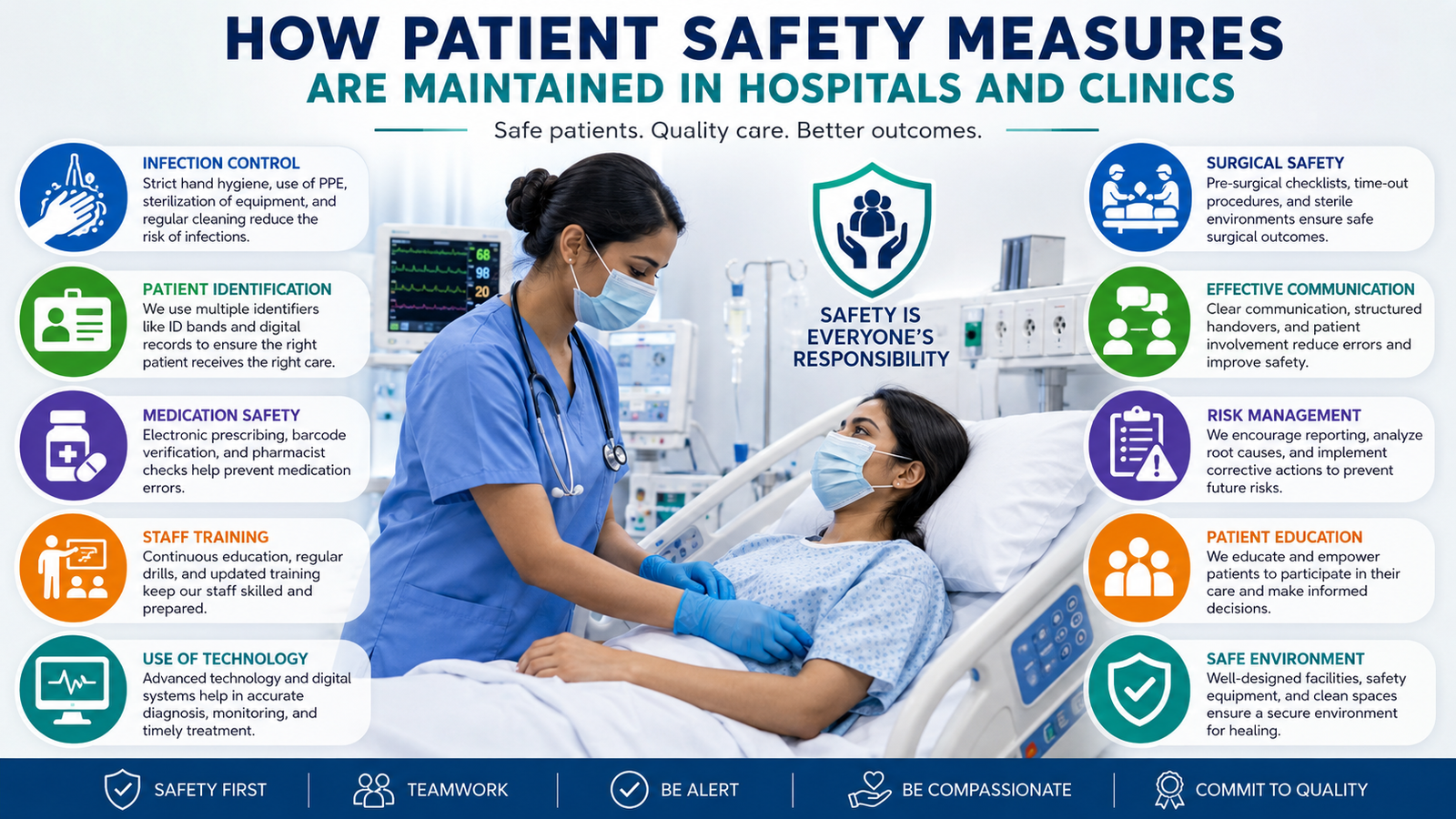
1. Strict Hygiene and Infection Control Practices
One of the most critical aspects of patient safety is infection prevention. Hospitals and clinics follow strict hygiene protocols to reduce the risk of infections.
- Hand hygiene: Healthcare workers must wash or sanitize their hands before and after every patient interaction.
- Use of personal protective equipment (PPE): Gloves, masks, gowns, and face shields are used to prevent contamination.
- Sterilization of equipment: Medical tools and surgical instruments are thoroughly sterilized after each use.
- Clean environment: Regular cleaning and disinfection of rooms, surfaces, and equipment help maintain a safe environment.
These practices significantly reduce the spread of healthcare-associated infections (HAIs), which can otherwise lead to serious complications.
2. Proper Patient Identification
Correct patient identification is essential to prevent medical errors such as wrong medication or incorrect procedures.
Hospitals use multiple methods to verify patient identity, including:
- Patient ID bands with name, age, and unique identification number
- Double-checking identity before administering medication or treatment
- Digital health records linked to patient profiles
Healthcare providers often follow a “two-identifier rule,” ensuring that at least two details (such as name and date of birth) match before proceeding with care.
3. Medication Safety Protocols
Medication errors are among the most common risks in healthcare. To prevent these, hospitals and clinics implement strict medication safety systems.
- Electronic prescribing systems: Reduce errors caused by illegible handwriting
- Barcode medication administration: Ensures the right patient receives the correct medication and dosage
- Pharmacist verification: Medications are cross-checked by trained pharmacists
- Clear labeling: All medications are properly labeled with dosage and instructions
These measures ensure that patients receive accurate and safe treatment.
4. Staff Training and Continuous Education
Healthcare professionals undergo extensive training to ensure patient safety. However, learning does not stop after initial education.
- Regular training sessions and workshops
- Simulation-based training for emergency situations
- Updates on new medical guidelines and technologies
- Safety drills and emergency response practice
Continuous education helps healthcare workers stay updated and prepared to handle complex situations effectively.
5. Use of Advanced Technology
Modern hospitals rely heavily on technology to enhance patient safety.
- Electronic Health Records (EHRs): Maintain accurate patient history and reduce documentation errors
- Monitoring systems: Track vital signs in real time
- Alarm systems: Alert staff to any sudden changes in patient condition
- Robotic surgery and precision tools: Improve accuracy and reduce human error
Technology plays a vital role in early detection of problems and quick response to emergencies.
6. Surgical Safety Protocols
Surgery involves higher risks, so strict safety measures are followed to ensure successful outcomes.
- Pre-surgical checklists: Confirm patient identity, procedure type, and surgical site
- Time-out procedures: A final pause before surgery to verify all details
- Sterile environment: Operating rooms are maintained with strict hygiene standards
- Post-operative monitoring: Ensures early detection of complications
These protocols significantly reduce surgical errors and improve patient outcomes.
7. Effective Communication Systems
Clear communication among healthcare providers is crucial for patient safety.
- Shift handovers: Detailed communication during staff changes
- Standardized communication tools: Such as SBAR (Situation, Background, Assessment, Recommendation)
- Patient involvement: Patients are encouraged to ask questions and share concerns
Poor communication can lead to serious errors, so hospitals prioritize clear and structured information exchange.
8. Risk Management and Reporting Systems
Hospitals actively identify and manage potential risks through structured systems.
- Incident reporting: Staff report errors or near-misses without fear of punishment
- Root cause analysis: Identifies underlying reasons for errors
- Corrective actions: Implemented to prevent recurrence
This proactive approach helps healthcare facilities continuously improve their safety standards.
9. Patient Education and Involvement
Patients also play an important role in ensuring their own safety.
Hospitals encourage patients to:
- Understand their diagnosis and treatment plan
- Ask questions about medications and procedures
- Report any unusual symptoms immediately
- Follow discharge instructions carefully
An informed patient is more likely to notice potential issues and seek timely help.
10. Safe Infrastructure and Facility Design
Hospital design also contributes to patient safety.
- Proper ventilation systems to reduce airborne infections
- Clearly marked emergency exits
- Safe patient transport systems (wheelchairs, stretchers)
- Adequate lighting and fall-prevention measures
A well-designed facility minimizes physical risks and enhances overall safety.
11. Infection Surveillance and Monitoring
Hospitals maintain infection surveillance programs to track and control infection rates.
- Regular audits and inspections
- Monitoring infection trends
- Immediate action in case of outbreaks
- Compliance with national and international safety standards
These programs help maintain a safe healthcare environment over time.
12. Emergency Preparedness
Hospitals must be prepared for emergencies such as natural disasters, pandemics, or sudden patient crises.
- Emergency response teams
- Disaster management plans
- Availability of life-saving equipment
- Regular emergency drills
Preparedness ensures that hospitals can respond quickly and effectively in critical situations.
Conclusion
Patient safety is a continuous and evolving process that requires dedication, coordination, and vigilance from every member of the healthcare system. Hospitals and clinics implement a wide range of measures—from strict hygiene practices and advanced technology to staff training and patient involvement—to ensure that patients receive safe and effective care.
While no system can eliminate all risks, a strong focus on safety significantly reduces the chances of errors and improves patient outcomes. Ultimately, maintaining patient safety is not just a responsibility but a commitment to delivering high-quality healthcare and building trust with patients.
FAQs
1. What is patient safety in healthcare?
Patient safety refers to the prevention of errors and adverse effects associated with healthcare. It focuses on protecting patients from harm during medical care.
2. Why is hand hygiene important in hospitals?
Hand hygiene helps prevent the spread of infections between patients and healthcare providers, making it one of the most effective safety measures.
3. How do hospitals prevent medication errors?
Hospitals use electronic prescriptions, barcode systems, pharmacist checks, and clear labeling to ensure safe medication administration.
4. What role do patients play in their own safety?
Patients can improve safety by understanding their treatment, asking questions, and reporting any unusual symptoms or concerns.
5. How does technology improve patient safety?
Technology such as electronic health records, monitoring systems, and automated alerts helps reduce errors and enables faster response to patient needs.