
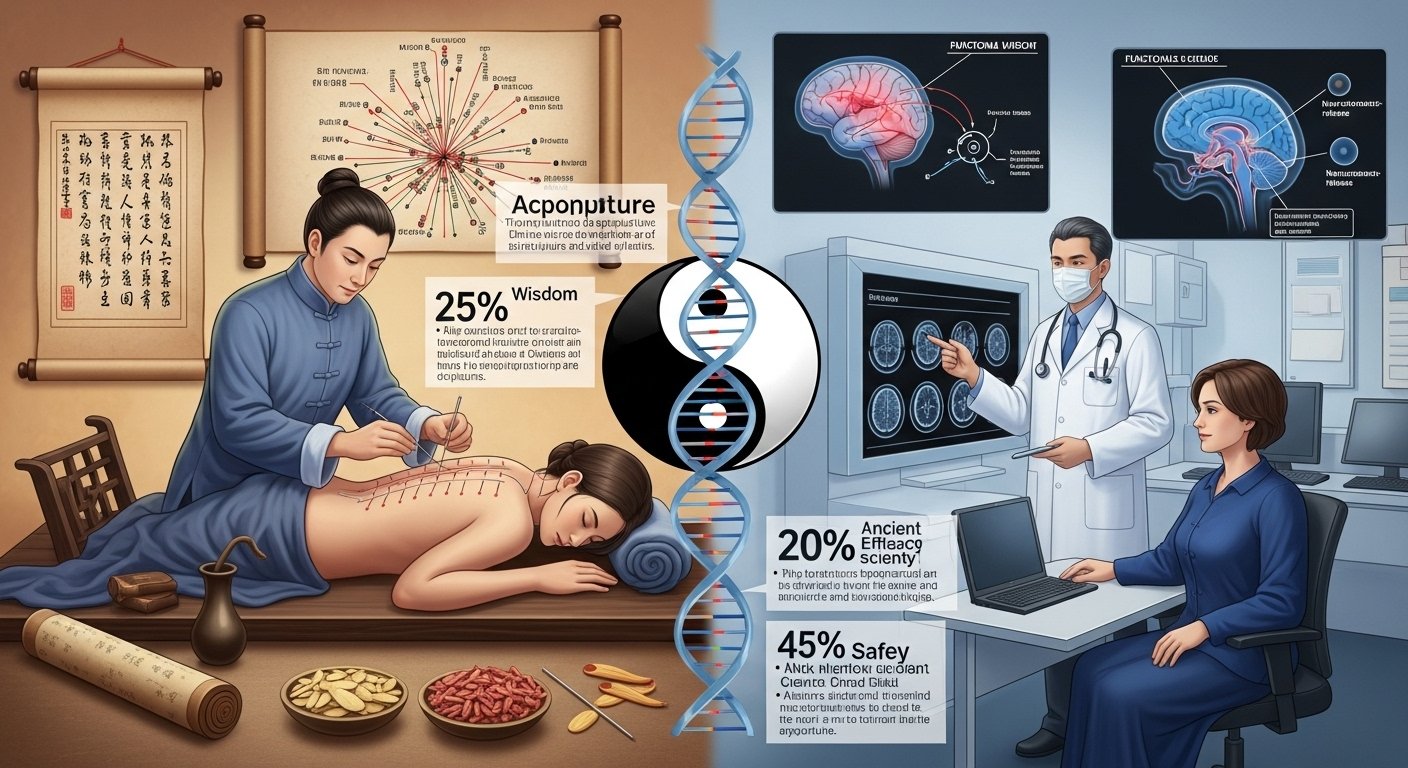

Acupuncture — the insertion of thin needles at specific points on the body to promote health and treat disease — has moved from traditional Chinese medicine practices into mainstream medical clinic settings, supported by growing clinical evidence for specific conditions and increasing integration into pain management, oncology support care, and integrative medicine programs. Understanding what conditions acupuncture effectively treats, what the evidence shows, and how it is practiced safely in medical settings helps patients make informed decisions about this therapeutic option. This guide explains the clinical evidence base and practice of medical acupuncture.
What the Evidence Shows
The strongest clinical evidence supports acupuncture for: chronic low back pain (reducing pain and improving function in multiple meta-analyses), neck pain, knee osteoarthritis, headache prevention (tension-type and migraine), and chemotherapy-induced nausea and vomiting. Moderate evidence supports its use for fibromyalgia, irritable bowel syndrome, and anxiety. Evidence is weaker or mixed for many other proposed applications. Most clinical guidelines that address acupuncture cite it as an appropriate option for chronic pain conditions where it has demonstrated effectiveness comparable to pharmacological treatment.
How Acupuncture Is Thought to Work
Traditional explanations involving qi (vital energy) flow through meridians have no established physiological basis. Contemporary neurobiological explanations for acupuncture effects involve: activation of endogenous opioid peptides (reducing pain signaling), modulation of the autonomic nervous system, stimulation of connective tissue mechanoreceptors releasing adenosine (a pain inhibitor), and anti-inflammatory effects through neuroimmune modulation. The mechanism remains partially understood — but mechanism uncertainty does not invalidate clinical effectiveness, which is established through clinical trials.
Acupuncture in Medical Clinic Settings
Medical acupuncture is practiced by licensed acupuncturists (L.Ac., Dipl.Ac.) and by physicians, NPs, PAs, and physical therapists who have completed acupuncture training programs. Academic medical center integrative medicine programs, pain management clinics, oncology supportive care clinics, and VA healthcare facilities increasingly offer acupuncture as part of their clinical menu. Physician referral to licensed acupuncturists is the most common pathway to acupuncture in integrated clinical settings.
Conclusion
Acupuncture is a legitimate, evidence-based therapeutic option for specific chronic pain conditions that deserves consideration alongside pharmacological and physical therapy approaches. If you have chronic pain conditions, particularly back or neck pain, osteoarthritis, or headache disorders, discuss acupuncture with your primary care provider or a pain specialist as a component of your comprehensive management plan.
FAQs – Acupuncture
Q1. How many acupuncture treatments are needed to see results?
A: Most clinical trials use 6–12 treatment sessions over several weeks. Clinical improvement is typically assessed after 6–8 sessions. Some patients notice improvement after 1–3 sessions; others require a full course. Unlike pharmaceutical treatments with largely predictable responses, acupuncture response is more variable between individuals.
Q2. Does acupuncture hurt?
A: Most patients report minimal or no pain with acupuncture needle insertion — the needles are extremely thin (much finer than hypodermic needles). A sensation of “de qi” — dull aching, heaviness, or spreading sensation at needle sites — is commonly experienced and traditionally considered an indicator of effective needle placement.
Q3. Is acupuncture safe if I take blood thinners?
A: Patients on anticoagulants (warfarin, direct oral anticoagulants) can receive acupuncture with appropriate precautions — avoiding deep needling in high-risk areas and applying adequate pressure after needle removal to prevent hematoma. Inform your acupuncturist about all anticoagulant medications before treatment.
Q4. What is dry needling and is it the same as acupuncture?
A: Dry needling uses acupuncture-type needles inserted into myofascial trigger points (knots in muscles) to relieve pain and muscle tension. It is practiced by physical therapists using a Western anatomical framework rather than traditional Chinese medicine meridian theory. The needle technique is similar; the theoretical basis and treatment selection differ.
Q5. Should I tell my doctor I’m receiving acupuncture?
A: Yes — always inform all your healthcare providers about all treatments you are receiving, including acupuncture. This enables your care team to consider acupuncture in the context of your overall treatment plan, recognize any interactions with concurrent treatments, and provide comprehensive whole-person care.