
Modern healthcare clinics are changing the way patients experience medical care. In the past, many patients expected long waiting times, repeated paperwork, rushed consultations, and general treatment plans. Today, clinics are using better systems, digital tools, trained staff, and patient-focused services to deliver faster and more personalized care.
Why Faster and Personalized Care Matters
Fast healthcare does not mean careless healthcare. It means reducing unnecessary delays so patients can get timely medical attention. Personalized care means understanding each patient’s unique health condition, lifestyle, medical history, symptoms, and goals.
When clinics combine speed with personalization, patients feel more supported and confident. Early diagnosis becomes easier, follow-ups become smoother, and treatment plans become more effective. This approach also helps doctors build better relationships with patients.
In modern healthcare, patients do not want one-size-fits-all treatment. They want care that is clear, respectful, and based on their personal health needs.
Digital Appointment Booking Reduces Waiting Time
One of the biggest ways clinics deliver faster care is through digital appointment booking. Instead of calling multiple times or waiting at the reception desk, patients can book appointments online.
Digital scheduling allows patients to choose available time slots, receive reminders, and reschedule if needed. It also helps clinics manage patient flow better. When appointments are properly organized, waiting rooms become less crowded and doctors can spend more focused time with each patient.
Online booking also reduces confusion for clinic staff. They can see appointment details, patient information, and visit reasons in advance, making the entire process smoother.
Electronic Health Records Improve Accuracy
Electronic health records play a major role in personalized care. These digital records store important patient information such as medical history, allergies, test results, prescriptions, diagnoses, and previous treatments.
When doctors have quick access to complete health records, they can make better decisions. They do not need to depend only on the patient’s memory or old paper files. This reduces errors and helps avoid repeated tests or unsuitable medicines.
Electronic records also make follow-up visits easier. Doctors can compare past and current results to understand whether a treatment is working.
Telemedicine Makes Care More Convenient
Telemedicine allows patients to consult doctors through video calls, phone calls, or online platforms. This is especially helpful for follow-up visits, minor symptoms, prescription reviews, and health advice.
Patients who live far away, have busy schedules, or face mobility challenges can benefit from virtual consultations. Telemedicine saves travel time and allows faster access to medical guidance.
For clinics, telemedicine helps manage patient load more efficiently. Patients who do not need a physical examination can receive care online, while those who need in-person attention can be prioritized.
Personalized Treatment Plans for Better Results
Every patient is different. Age, lifestyle, family history, medical conditions, diet, stress levels, and daily habits all influence health. Personalized treatment plans consider these factors instead of using the same approach for everyone.
For example, two patients with high blood pressure may need different advice depending on their weight, activity level, diet, stress, and other health problems. A personalized plan may include medication, lifestyle changes, exercise guidance, diet support, and regular monitoring.
This approach improves treatment results because patients receive care that matches their real needs.
Faster Diagnostic Services Support Early Treatment
Modern clinics are improving diagnostic services to provide quicker results. Many clinics now work closely with laboratories, imaging centers, and digital report systems.
Faster test booking, sample collection, and online report sharing help doctors diagnose conditions earlier. When reports are available quickly, treatment can begin without unnecessary delays.
Early diagnosis is especially important for conditions such as diabetes, thyroid disease, infections, heart problems, and nutritional deficiencies. Quick testing and timely treatment can prevent complications.
Remote Monitoring Helps Doctors Track Progress
Remote patient monitoring is helping clinics provide continuous care outside the clinic. Patients may use devices such as blood pressure monitors, glucose meters, smartwatches, or pulse oximeters to track health data.
This information can help doctors monitor progress and detect warning signs early. For patients with chronic diseases, remote monitoring reduces the need for frequent clinic visits while still keeping doctors informed.
It also encourages patients to take an active role in their health. When people see their health numbers regularly, they become more aware of their habits and progress.
Better Communication Improves Patient Experience
Communication is an important part of personalized care. Modern clinics use SMS, calls, emails, mobile apps, and patient portals to stay connected with patients.
Patients can receive appointment reminders, medicine instructions, lab reports, follow-up messages, and health tips. Clear communication reduces confusion and helps patients follow treatment properly.
Good communication also builds trust. When patients feel heard and understood, they are more likely to follow medical advice and return for regular care.
Preventive Care Saves Time and Improves Health
Preventive care helps clinics detect health risks before they become serious. Regular checkups, screenings, vaccinations, lifestyle counseling, and early diagnosis all support better long-term health.
Instead of waiting for illness to become severe, clinics encourage patients to take action early. This saves time, reduces medical costs, and prevents complications.
Preventive care is personalized because it depends on a patient’s age, gender, family history, lifestyle, and health risks. For example, one patient may need heart health screening, while another may need diabetes monitoring or nutritional advice.
Trained Staff Make Clinic Visits Smoother
Faster care is not only about technology. Trained clinic staff also play a major role. Receptionists, nurses, lab technicians, and care coordinators help patients move through the clinic smoothly.
Good staff members guide patients, collect information correctly, manage appointments, explain procedures, and support doctors. Their role reduces delays and improves the overall patient experience.
A well-organized clinic team ensures that patients do not feel lost or ignored during their visit.
AI and Automation in Modern Clinics
Artificial intelligence and automation are helping clinics become more efficient. Automated reminders, digital forms, billing systems, and report management save time for both patients and staff.
AI may help doctors review patient data, identify risks, summarize health records, and support decision-making. However, AI does not replace doctors. It works as a tool that helps healthcare professionals provide better care.
Automation also reduces repetitive paperwork, allowing doctors and staff to focus more on patients.
Patient-Centered Care Builds Trust
Personalized care is based on the idea that patients are not just medical cases. They are individuals with concerns, emotions, preferences, and goals.
Patient-centered clinics listen carefully, explain treatment options clearly, and involve patients in decisions. This makes patients feel respected and more confident about their care.
When clinics focus on patient comfort, privacy, safety, and communication, the healthcare experience becomes more positive.
Challenges Clinics Must Manage
Even though modern clinics are improving care, there are still challenges. Technology costs, staff training, data privacy, internet access, and patient education are important concerns.
Some patients may not be comfortable using digital tools. Others may worry about the safety of their health data. Clinics must make systems simple, secure, and easy to understand.
The best clinics combine technology with compassion. Fast care should never feel rushed, and personalized care should always protect patient privacy.
Source
https://sl1nk.com/ku1k3jq
https://l1nq.com/x7g2c1j
Conclusion
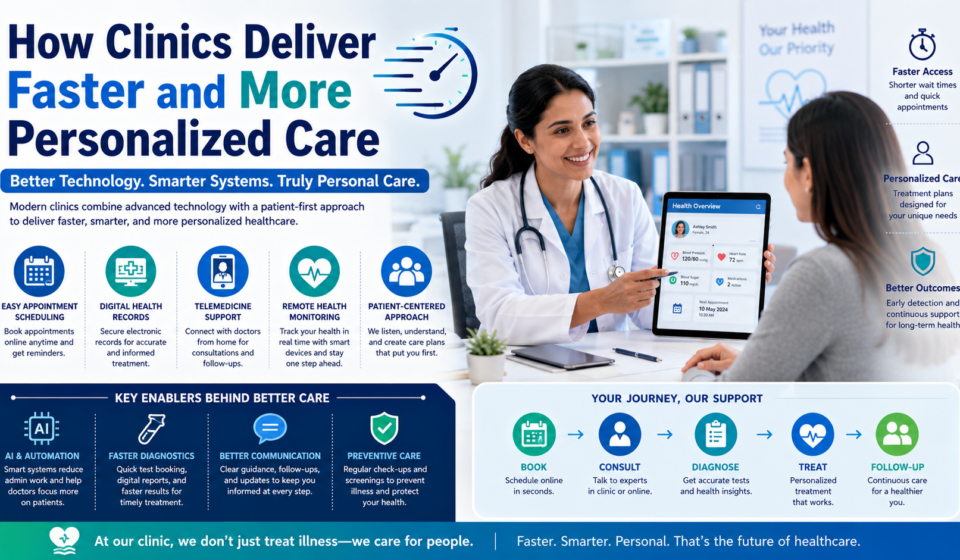
Clinics are delivering faster and more personalized care by using digital appointment systems, electronic health records, telemedicine, remote monitoring, automation, better communication, and preventive healthcare. These changes help patients receive timely attention and treatment plans that match their individual needs.
Modern clinics are no longer focused only on treating illness. They are improving the complete patient journey, from booking an appointment to diagnosis, treatment, follow-up, and long-term wellness.
Faster care saves time, while personalized care improves trust and outcomes. Together, they create a better healthcare experience for patients and a more effective system for clinics.
FAQs
1. How do clinics provide faster care?
Clinics provide faster care through online appointment booking, digital records, telemedicine, automated reminders, faster diagnostics, and organized clinic management.
2. What does personalized care mean?
Personalized care means treatment and health advice are designed according to a patient’s medical history, lifestyle, age, symptoms, and personal needs.
3. How do electronic health records help patients?
Electronic health records help doctors access patient history, test results, allergies, and prescriptions quickly, improving accuracy and safety.
4. Can telemedicine make clinic care faster?
Yes, telemedicine allows patients to consult doctors online for follow-ups, minor symptoms, report reviews, and medical advice without visiting the clinic physically.
5. Why is preventive care important?
Preventive care helps detect health problems early, reduce complications, and support long-term wellness.