
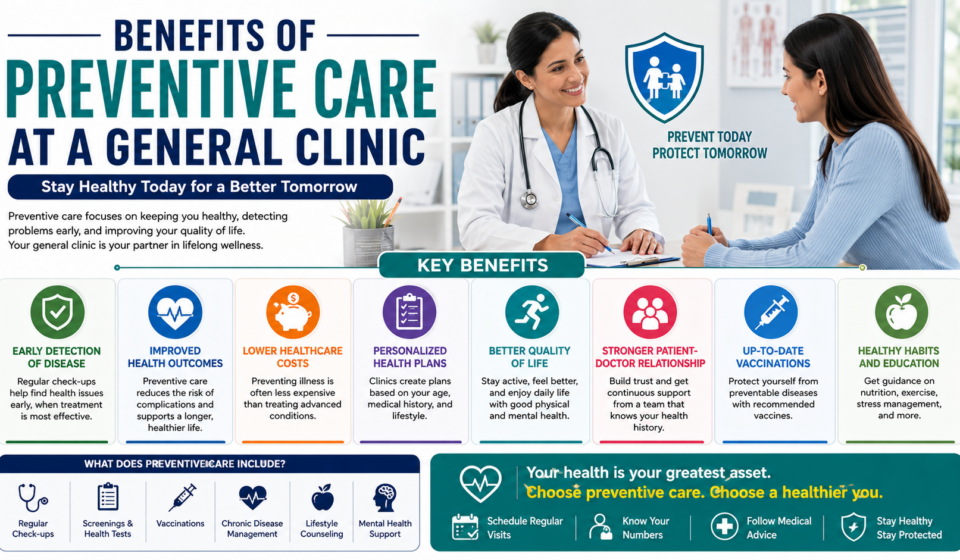

Preventive care is one of the most effective ways to maintain good health and reduce the risk of serious illnesses. Many people visit a clinic only when they are sick, but regular preventive care can identify health issues early and improve overall well-being.
What Is Preventive Care?
Preventive care refers to healthcare services designed to prevent diseases or detect them early before symptoms become severe. It includes routine health assessments, screenings, and advice that support long-term wellness.
At a general clinic, preventive care is often the first step in maintaining health. Doctors can identify risk factors, suggest lifestyle changes, and recommend treatments before conditions worsen. This proactive approach can prevent chronic diseases and improve life expectancy.
Preventive care is not limited to one age group. Children, adults, and seniors all benefit from regular medical checkups and personalized guidance.
Early Detection of Health Problems
One of the biggest benefits of preventive care is early detection. Many serious conditions such as diabetes, high blood pressure, heart disease, and certain cancers may develop without noticeable symptoms.
Routine screenings at a general clinic can identify these conditions at an early stage. Early diagnosis increases the chances of successful treatment and reduces the risk of complications.
For example, regular blood tests can detect high cholesterol or elevated blood sugar levels before they lead to severe health issues. This allows patients to make changes and receive treatment promptly.
Reduces Long-Term Healthcare Costs
Preventive care can save money in the long run. Treating advanced illnesses often requires expensive medications, surgeries, or hospital stays. In contrast, routine checkups and screenings are usually more affordable.
By identifying health concerns early, patients can avoid emergency treatments and prolonged medical care. Preventive services help reduce the financial burden on families and healthcare systems.
Regular clinic visits may seem unnecessary to some people, but they often prevent costly medical complications later.
Supports Better Management of Chronic Diseases
For patients with ongoing conditions such as hypertension, asthma, or diabetes, preventive care is essential. Regular monitoring ensures that these conditions are managed effectively.
Doctors at a general clinic can track progress, adjust medications, and recommend lifestyle changes. This helps patients maintain stable health and avoid complications.
Consistent preventive care also improves treatment outcomes by ensuring patients stay informed about their health status.
Encourages Healthy Lifestyle Choices
General clinics do more than diagnose illnesses. They also educate patients about healthy habits that can prevent disease.
Doctors often provide guidance on nutrition, exercise, sleep, and stress management. This advice helps individuals make informed decisions that improve daily health.
Preventive counseling can motivate people to adopt healthier routines, quit harmful habits, and reduce risks associated with poor lifestyle choices.
Keeps Vaccinations Up to Date
Vaccinations are an important part of preventive care. They protect against infectious diseases and help communities stay safe.
General clinics offer recommended vaccinations for children and adults, including flu shots and immunizations for various diseases. Staying updated on vaccines reduces the spread of illness.
Regular clinic visits ensure patients receive vaccinations on time and according to medical guidelines.
Improves Overall Quality of Life
Preventive care contributes to better physical and mental health. Knowing your health status and taking action early provides peace of mind.
Patients who attend regular checkups often feel more confident about their health. They can address concerns before they become serious, reducing stress and uncertainty.
Healthy individuals are also more productive, active, and able to enjoy daily life without frequent illness.
Strengthens the Doctor-Patient Relationship
Regular preventive visits help build trust between patients and healthcare providers. Doctors become familiar with a patient’s medical history, lifestyle, and specific needs.
This relationship improves communication and allows for more personalized care. Patients may feel more comfortable discussing concerns when they have an established connection with their doctor.
A strong doctor-patient relationship can lead to better treatment decisions and long-term health outcomes.
Helps Families Stay Healthy
Preventive care benefits entire families. General clinics provide health services for children, adults, and seniors, making them convenient for family healthcare.
Parents can monitor child development, adults can manage work-related stress, and older family members can receive age-related screenings. This comprehensive care supports all stages of life.
Family-focused preventive care also encourages healthy habits within households.
Promotes Community Health
When more people participate in preventive care, communities become healthier overall. Early treatment reduces the spread of contagious diseases and lowers healthcare burdens.
General clinics serve as accessible healthcare centers where communities can receive education, vaccinations, and screenings. This contributes to better public health outcomes.
Preventive care supports not only individuals but also society as a whole.
Source
https://sl1nk.com/3p5nr63
https://sl1nk.com/qzhqt8r
Conclusion
Preventive care at a general clinic is essential for maintaining long-term health. It helps detect diseases early, reduce healthcare costs, improve chronic condition management, and promote healthier lifestyles. Regular checkups are an investment in better health and a higher quality of life.
By making preventive care a routine part of life, individuals can avoid many health problems before they start. General clinics provide accessible and reliable healthcare services that support wellness for all ages. Prioritizing prevention today leads to healthier tomorrows.
FAQs
1. What services are included in preventive care at a clinic?
Preventive care includes routine checkups, screenings, vaccinations, health counseling, and monitoring for chronic conditions.
2. How often should I visit a general clinic for preventive care?
Most adults benefit from at least one annual checkup, though frequency may vary depending on age and health conditions.
3. Why is preventive care important?
It helps detect diseases early, reduces complications, and supports long-term wellness.
4. Can preventive care reduce medical expenses?
Yes. Early detection and regular monitoring often prevent costly treatments and hospitalizations.
5. Who should get preventive care?
Everyone, including children, adults, and seniors, can benefit from preventive healthcare services.