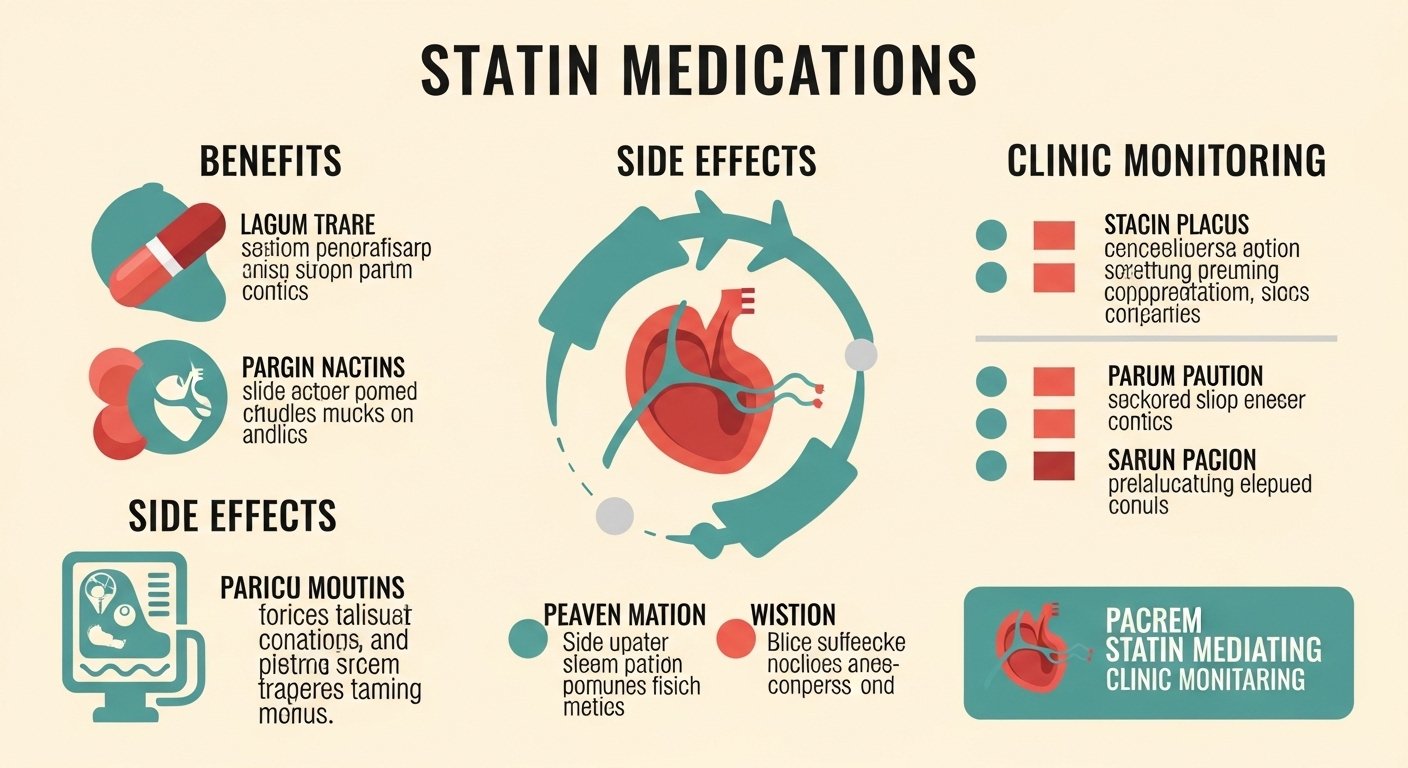

Statins — HMG-CoA reductase inhibitors that reduce LDL cholesterol production in the liver — are among the most prescribed and most evidence-backed medications in preventive medicine. Multiple large randomized trials and meta-analyses involving hundreds of thousands of patients have established that statins reduce heart attack, stroke, and cardiovascular death rates by 25–35% in patients at elevated cardiovascular risk. Despite this impressive evidence base, statins are associated with significant patient concerns — particularly about muscle side effects — that lead many patients to discontinue therapy. This guide explains statin benefits, side effects, and monitoring at the clinic level.
Common Statin Medications
High-intensity statins (reducing LDL by 50%+): atorvastatin 40–80mg, rosuvastatin 20–40mg. Moderate-intensity statins (30–50% LDL reduction): atorvastatin 10–20mg, rosuvastatin 5–10mg, simvastatin 20–40mg, pravastatin 40–80mg, lovastatin 40mg. Low-intensity statins (30% LDL reduction): simvastatin 10mg, pravastatin 10–20mg, lovastatin 20mg.
Benefits Beyond LDL Reduction
Statins provide benefits beyond LDL lowering — anti-inflammatory effects, plaque stabilization (reducing vulnerability of atherosclerotic plaques to rupture), and reduced thrombogenicity — contributing to their cardiovascular outcomes benefit beyond what would be predicted from LDL reduction alone. Potential additional benefits being researched include: reduced dementia risk, reduced sepsis mortality, and reduced cancer risk — though none are currently indication-level evidence.
Side Effects and Monitoring
Muscle Symptoms
The most common patient complaint — myalgias (muscle pain or weakness) — occurs in 5–10% of statin users in clinical trials (and higher in real-world settings where patient selection differs). Most patients with myalgia can successfully switch to a different statin or lower dose. True myopathy (CK elevation with weakness) and rhabdomyolysis (dangerous muscle breakdown) are rare — occurring in fewer than 1 in 10,000 patients.
Liver Effects
Statins cause minor transaminase elevation in a small proportion of patients. Severe hepatotoxicity is rare. Routine liver function testing is not required for asymptomatic patients on statins; testing is indicated if symptoms suggest liver dysfunction.
Diabetes Risk
High-intensity statins modestly increase Type 2 diabetes risk — an approximately 10% relative increase over 4 years of use. This risk is small relative to the cardiovascular event reduction benefit, and existing diabetes guidelines recommend statins for diabetic patients regardless of this risk.
Conclusion
Statins are among medicine’s most evidence-based preventive tools. If you are prescribed a statin, understand that muscle symptoms are common but often manageable with dose adjustment or medication change. Stopping statins due to perceived side effects that turn out to be unrelated to the medication costs real cardiovascular protection. Discuss any statin concerns with your clinic before discontinuing — most can be successfully addressed.
FAQs – Statins
Q1. Should everyone with high cholesterol take a statin?
A: Statin prescribing is based on cardiovascular risk, not cholesterol level alone. Current guidelines use the Pooled Cohort Equations to calculate 10-year ASCVD (atherosclerotic cardiovascular disease) risk — the threshold for statin initiation is a 10-year risk of 7.5–10% or higher, or established cardiovascular disease, regardless of LDL level.
Q2. Can I take a statin every other day?
A: For patients with muscle side effects on daily dosing, every-other-day dosing of long-half-life statins (atorvastatin, rosuvastatin) is used in clinical practice and may reduce side effects while maintaining some LDL reduction. This is a practical clinical compromise rather than the evidence-based standard of daily dosing.
Q3. Are natural supplements as effective as statins?
A: Red yeast rice contains monacolin K (which is chemically identical to lovastatin) and can modestly reduce LDL. Fish oil in pharmacological doses (icosapentaenoic acid/EPA as Vascepa) reduces cardiovascular events in statin-treated patients. Berberine has modest LDL-lowering effects. None have the same magnitude of evidence as prescription statins for cardiovascular event reduction.
Q4. Can I stop taking a statin if my cholesterol normalizes?
A: Statin discontinuation allows LDL to return to pre-treatment levels within weeks. Statins manage cholesterol as a chronic condition — the LDL-lowering effect is present only while taking the medication. For patients on statins for primary prevention of a first cardiovascular event, discontinuation removes the ongoing cardiovascular protection. Discuss changes in medication with your provider before stopping.
Q5. What is a PCSK9 inhibitor and how is it different from a statin?
A: PCSK9 inhibitors (evolocumab, alirocumab) are injectable monoclonal antibodies that prevent LDL receptor degradation, dramatically increasing LDL clearance from the bloodstream — reducing LDL by 50–60% on top of statin therapy. They are reserved for very high-risk patients with inadequate LDL reduction on maximum statin doses or with statin intolerance.